

The era of the traditional tiler is fading as UK homeowners demand faster, cleaner, and more resilient solutions for their wetrooms. For years, the choice was limited to high-maintenance ceramics or cheap-looking plastic alternatives. That compromise ends now. Stone Plastic Composite (SPC) represents a fundamental shift in bathroom engineering, providing a surface that is rigid, durable, and 100% waterproof. It is the definitive choice for those who value precision, longevity, and professional standards.
You're likely tired of scrubbing mouldy grout lines or worrying about the long-term structural integrity of your shower walls. It's a common frustration that often leads to costly repairs. This 2026 guide explains why SPC shower panels are the future of waterproof cladding. You'll discover how to achieve a luxury stone-effect finish without the maintenance, high labour costs, or extended bathroom downtime. We will examine the technical build of these panels, compare the latest design trends, and provide the essential criteria for selecting the perfect fit for your preferred colour palette and furniture.
Key Takeaways
- Understand why the rigid mineral-bonded core makes SPC shower panels superior to hollow PVC for impact resistance and long-term durability.
- Identify the technical specifications to look for, including the ideal 4mm to 6mm thickness required for structural integrity in UK wetrooms.
- Learn the critical substrate preparation and cutting techniques that allow for a fast, professional installation over existing surfaces.
- Discover the daily maintenance routines and specific cleaning products that keep your stone-effect finish pristine whilst preventing limescale build-up.
- Evaluate the performance differences between SPC, acrylic, and PVC to ensure you choose the most robust material for a high-traffic bathroom.
What are SPC Shower Panels and Why are They Trending in the UK?
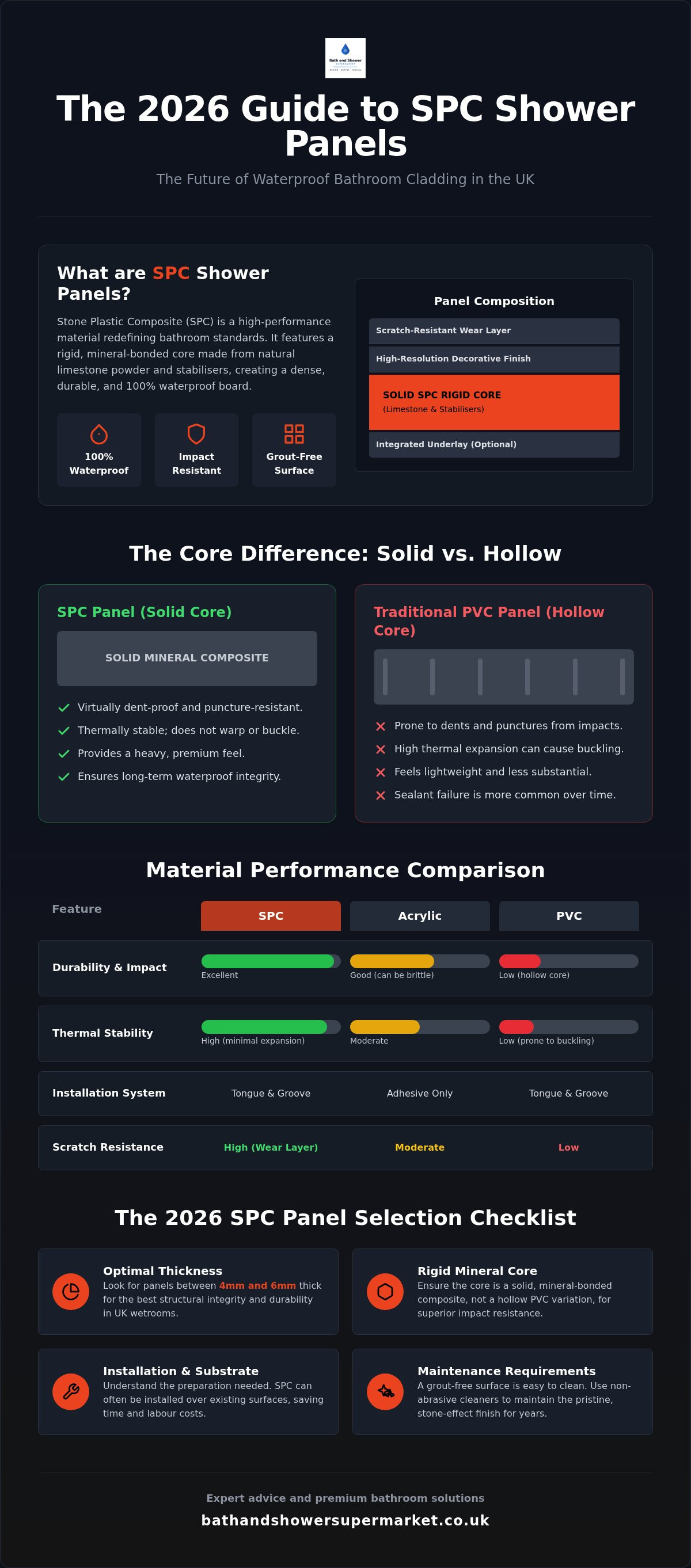
SPC stands for Stone Plastic Composite. It is a high-performance material that has redefined the standards for internal bathroom cladding. Whilst some retailers describe it as a mere variation of PVC, it is actually a distinct mineral-bonded rigid core product. It combines natural limestone powder with stabilisers to create a board that is remarkably dense. This engineering makes it the definitive choice for the 2026 UK market. Homeowners are increasingly moving away from traditional ceramic tiles. They want large-format surfaces that offer a spa-like aesthetic without the relentless maintenance of grout. These panels are rigid, durable, and waterproof.
To understand the broader context of What are wall panels?, one must look at their functional history in insulation and soundproofing. However, SPC shower panels represent the latest evolution in this category. They are designed specifically for the rigorous environment of a wetroom. The current trend in the UK is focused on quiet luxury. This involves using materials that mimic natural stone or marble but offer superior physical properties. SPC provides that authentic, heavy-duty feel under the hand, unlike the thin, flexible plastic panels of the past.
The Science of the Rigid Core
The core is the engine of the panel. Unlike standard PVC panels which are hollow and prone to denting, SPC is solid. It is virtually dent-proof. The limestone-based core ensures the material remains stable. It won't warp, expand, or contract when exposed to the high temperatures of a modern shower. This structural integrity is vital for maintaining a waterproof seal over many years. The mineral-composite ratio is engineered to provide maximum durability whilst remaining light enough for a fast, one-person installation.
Why Grout-Free Bathrooms are the New Standard
Porous grout is a magnet for mould. It is the primary failure point in most UK bathrooms. By eliminating grout lines entirely, SPC panels create a hygienic, non-porous surface that is effortless to clean. In small UK en-suites, these large panels create a seamless, expansive look that makes the space feel significantly larger. This minimalist approach pairs perfectly with modern wetroom screens UK for a clean, architectural finish. You get the visual impact of a slab of natural stone without the weight, cost, or specialist equipment required for traditional masonry. It is a logical, efficient, and sophisticated upgrade for any renovation project.
SPC vs. Acrylic and PVC: A Performance Comparison
Selecting the right material for a bathroom renovation often comes down to a trade-off between cost and longevity. Whilst standard PVC panels are budget-friendly, they lack the structural density required for a high-traffic family bathroom. PVC is typically hollow; this makes it prone to puncture damage and denting from accidental knocks. Acrylic panels offer a sleek, high-gloss look, but they can be brittle and difficult to install without professional help. SPC shower panels bridge this gap by offering a solid, mineral-rich core that is virtually indestructible. The increasing use of composites in modern construction highlights a shift toward materials that are both lightweight and incredibly resilient.
Thermal expansion is another critical differentiator. PVC and acrylic are highly reactive to temperature changes. This often leads to buckling or "popping" off the wall in a hot shower as the material expands. SPC remains flush and stable. Its stone-plastic composition has a much lower expansion rate, ensuring that your waterproof seals stay intact for years. Installation is also more logical. Most SPC systems use a precision tongue-and-groove click system. This allows for perfect alignment, whereas acrylic often relies on adhesive alone, which is far less forgiving during the fitting process.
Durability and Lifespan in Wet Environments
Premium SPC is built for endurance. It features a specialised, scratch-resistant wear layer that protects the decorative finish from daily wear and tear. This is why SPC shower panels are becoming the standard for 2026 renovations. They are particularly effective when pairing your walls with Kartell drench showers. You need a substrate that can handle the weight and vibration of a high-pressure system without cracking. SPC panels provide that necessary rigidity. They don't show stress marks, and they won't degrade in the face of constant humidity.
The "Real Stone" Feel and Texture
Aesthetics are where SPC truly outshines its competitors. Modern manufacturing uses Embossed-in-Register (EIR) technology. This process aligns the surface texture with the visual print. A marble-effect panel actually feels like marble under your fingertips. Acrylic often has a high-gloss, "plasticky" sheen that can feel cold and artificial. In contrast, SPC typically offers a sophisticated matte finish. The weight of the panels contributes to a solid, premium feel that mimics traditional masonry. You can explore our SPC wall tiles to see how these textures compare to standard cladding options.
The 2026 SPC Shower Panel Selection Checklist
Selecting the right boards requires more than just picking a favourite colour. You must evaluate the technical specifications to ensure the product is fit for purpose. Poorly chosen cladding leads to installation delays and structural failure. Use this five-point checklist to verify the quality of your SPC shower panels before you commit to a purchase.
- Core Thickness: Aim for 4mm to 6mm. This range provides the optimal balance of rigidity, weight, and stability for UK domestic plumbing setups.
- Edge Type: Verify the joining system. Precision-engineered tongue-and-groove edges create a near-seamless finish; whilst square-edged panels require H-trims for every vertical joint.
- Texture and Finish: Consider the tactile experience. Choose from honed stone for a contemporary look, deep slate for industrial styles, or polished marble for traditional elegance.
- Certification: Ensure the product carries a Class 1 fire rating and complies with UKCA marking standards. Reliability is non-negotiable.
- Brand Compatibility: Check if the panel textures coordinate with your chosen furniture ranges to avoid clashing finishes.
Measuring Your Space for Zero Waste
Precision in measurement reduces waste and saves money. For a standard 900x900mm corner enclosure, you typically require two large-format panels. Don't forget to account for the width of internal corner joints and end caps. These trims usually add 10mm to 15mm to the total span. When measuring around windows or pipework, always measure from the fixed corner outwards. This ensures the cut edges are hidden behind trims or furniture. It keeps the visible surface clean, professional, and symmetrical.
Coordinating with Scudo Bathroom Furniture
A cohesive bathroom design relies on matching textures and tones. You should coordinate your choice of SPC shower panels with high-quality Scudo bathroom furniture online. If you've selected a matte vanity unit in a bold colour like indigo or forest green, choose a neutral stone-effect panel to act as a quiet backdrop. This allows the furniture to remain the focal point. Alternatively, you can use slatted wall panels as a vertical accent feature on a dry wall to complement the SPC surfaces in the wet area. This creates a balanced, architectural look that feels intentional and meticulously planned.
Installation Essentials: What You Need to Know
A successful fit-out relies on methodical preparation. Because SPC shower panels are significantly denser and heavier than standard PVC, they require a specific approach to handling and adhesion. You cannot cut corners with a material designed for lifelong durability. A professional installation is fast, clean, and efficient when you follow a logical sequence. Use these four essential steps to ensure a professional, watertight result.
- Step 1: Substrate Preparation. Ensure your walls are plumb, dry, and free from loose debris. Any significant bumps will prevent the panel from sitting flush, which can compromise the waterproof seal.
- Step 2: Cutting the Panels. Use a fine-toothed power saw for straight lines or a heavy-duty utility knife to score and snap. The rigid core provides a clean edge but demands a sharp, high-quality blade for precision.
- Step 3: Applying Adhesive. Whilst the "dot and dab" method is common for dry-lining, it is unsuitable for wetrooms. You must use a high-grab adhesive in a continuous bead or full-coverage pattern to eliminate voids where moisture could collect.
- Step 4: Joint Sealing. Apply colour-matched silicone to every internal corner trim and tongue-and-groove joint. This creates a redundant moisture barrier that protects your home's structure.
Can You Install SPC Over Existing Tiles?
One of the most efficient ways to use SPC shower panels is by installing them directly over existing ceramic tiles. This "over-tiling" method is fast, clean, and eliminates the need for messy demolition. However, you must verify that the original tiles are firmly bonded to the wall. Any hollow or loose tiles must be removed and patched first. You should also consider the increased wall thickness. This often requires extension pieces for your shower valves and careful trimming around door frames to maintain a seamless, professional transition.
Required Tools for a Professional Finish
Achieving a luxury look requires the correct equipment. Because of the panel's weight, suction cups are essential for precise positioning without straining the joints. A high-quality spirit level and a dedicated high-grab adhesive are non-negotiable for a permanent bond. To complete the transformation, many homeowners choose to pair their walls with SPC bathroom flooring for a fully coordinated, 100% waterproof environment. You can view our full range of installation accessories to ensure you have everything needed for the job.
Maintenance and Longevity: Keeping Your Panels Pristine
The primary appeal of Stone Plastic Composite is its low-maintenance nature. Unlike ceramic tiles, there is no porous grout to harbour bacteria or discolour over time. However, whilst SPC shower panels are engineered for maximum durability, a consistent care routine will ensure they remain in showroom condition for decades. The material is dense, non-porous, and resilient. It is designed to withstand the rigours of a high-traffic UK bathroom without the need for specialist stone sealants or aggressive scrubbing.
- Daily care: Use a simple squeegee after every shower. This removes surface water immediately and is your best tool for preventing limescale build-up.
- Hard water management: SPC’s non-porous surface naturally resists mineral deposits. In hard water areas, this prevents the "cloudy" appearance often seen on glass or natural stone.
- Cleaning products to avoid: Steer clear of bleach, ammonia, and abrasive scouring pads. These can dull the protective wear layer and eventually compromise the high-definition texture.
- Long-term seal check: Inspect your silicone joints every 12 months. Whilst the panels themselves are 100% waterproof, the integrity of the room depends on the flexible seals at the corners and base.
The Best Cleaning Routine for SPC
Maintaining the finish is straightforward. We recommend using warm soapy water or a pH-neutral bathroom cleaner applied with a soft microfibre cloth. This is usually sufficient to remove soap scum and body oils. SPC is significantly more resistant to chemical staining than natural stone or acrylic, meaning it won't react to hair dyes or strong soaps. The material also features high UV resistance. This prevents colour fading over time, even in bathrooms with large windows and direct sunlight. It remains vibrant, stable, and attractive.
Repairing Minor Scratches or Scuffs
Deep gouges are exceptionally rare in SPC due to the rigid stone-plastic core. If a minor surface scuff occurs, specialist repair kits containing colour-matched wax or resin can be used to fill the area. Preventative measures are always more efficient. When installing heavy chrome shower baskets or hardware, ensure they have rubberised contact points to prevent metal-on-panel friction. This simple step protects the embossed texture from unnecessary wear. By following these professional care standards, your bathroom will retain its luxury aesthetic with minimal effort. To begin your project with the highest quality materials, browse the full SPC shower panel range at Bath & Shower Supermarket.
Upgrade Your Bathroom with 2026 Cladding Technology
SPC technology has fundamentally changed the landscape of UK bathroom renovations. By choosing a rigid mineral-bonded core, you ensure your wetroom remains impact-resistant, 100% waterproof, and visually striking for years to come. You don't have to settle for the high maintenance of traditional tiles or the structural weakness of hollow plastic. It's about engineering a space that values your time and provides long-term peace of mind through superior material science.
As an authorised UK retailer for Scudo and Kartell, we prioritise structural integrity and logistical speed. Our central warehouse is fully stocked with the latest stone-effect designs, facilitating fast national delivery across the UK. Whether you are over-tiling an existing en-suite or beginning a complete wetroom renovation, SPC shower panels offer the most efficient route to a high-end finish without the need for specialist masonry tools.
Shop our curated range of SPC shower panels and wall tiles to find the perfect match for your project. Your ideal bathroom transformation is well within reach.
Frequently Asked Questions
Are SPC shower panels better than traditional tiles?
SPC panels are superior to traditional tiles in terms of installation speed, maintenance, and long-term hygiene. By eliminating grout, you remove the primary breeding ground for mould and the need for relentless scrubbing. Whilst tiles offer a classic look, these panels provide a seamless, modern aesthetic that is faster to fit and significantly easier to keep clean.
Can I install SPC wall panels myself or do I need a professional?
Confident DIY enthusiasts can successfully install these panels using high-grab adhesive and standard power tools. The tongue-and-groove system is designed for a logical, straightforward fit that ensures perfect alignment. However, if your renovation involves moving plumbing or structural wall alterations, a professional installer is recommended to ensure full compliance with UK building regulations.
Is SPC 100% waterproof for use in a wetroom?
Yes, the stone plastic composite material is entirely inert and 100% waterproof. It cannot absorb moisture, swell, or rot, making it the definitive choice for wetroom environments. When installed with the correct silicone seals and trims, SPC shower panels create a permanent, impenetrable barrier that protects your home's structure from water damage.
How do I cut SPC shower panels without cracking them?
You should use a fine-toothed power saw or a sharp, heavy-duty utility knife to score and snap the panels. The rigid mineral core is dense but responds well to clean, decisive cuts. Always ensure the panel is fully supported on a flat, stable work surface to prevent vibration and ensure a professional, splinter-free edge.
Can you put SPC panels over existing tiles in a bathroom?
You can install SPC panels directly over existing ceramic tiles, provided the original surface is firm, level, and clean. This method is an efficient way to modernise a bathroom without the mess of demolition. You must check the adhesion of the existing tiles and ensure you use a high-quality adhesive designed for non-porous substrates.
How do SPC panels handle high-pressure drench showers?
These panels are engineered to withstand the weight and constant vibration of high-pressure drench showers. Unlike hollow PVC alternatives, the solid core of SPC shower panels provides a rigid, stable substrate that won't flex or rattle. This structural integrity ensures that your heavy brassware remains securely fixed and your waterproof joints remain intact.
Do SPC shower panels require any special maintenance?
No specialist maintenance is required beyond regular cleaning with warm soapy water and a soft microfibre cloth. You should avoid using bleach or abrasive scouring pads, as these can dull the protective wear layer over time. Using a squeegee after each shower is the most efficient way to prevent limescale and keep the stone-effect finish pristine.
What is the difference between SPC and PVC wall panels?
The fundamental difference is the core; SPC has a solid stone-mineral core, whilst PVC is hollow and plastic-based. This composition makes SPC significantly more impact-resistant, thermally stable, and durable. It does not buckle in high temperatures and offers a premium, heavy-duty feel that standard PVC cladding cannot match.


