

The traditional ceramic tile, once the gold standard of British renovations, is rapidly becoming an outdated choice for the modern home. While tiling was long considered the only path to a premium aesthetic, bathroom cladding has evolved into a sophisticated, high-performance alternative. You've likely spent far too many hours scrubbing discoloured grout or worrying about the hidden damp that follows a failing seal. It's a common frustration, and we agree that your bathroom should be a place of relaxation rather than a constant maintenance burden.
This 2026 buying guide will show you how to choose, source, and install the perfect bathroom cladding for a durable, stylish, and low-maintenance finish. We'll move past the hollow PVC options of the past to focus on the latest SPC wall tiles and slatted panels that offer precision, durability, and professional quality. You'll discover how to slash installation times, eliminate mould-prone surfaces, and achieve a high-end result that lasts for years. We'll cover everything from material selection to the practical logistics of a grout-free installation, providing the clear, expert guidance required for a successful project.
Key Takeaways
- Eliminate mould and leaking grout lines by transitioning to modern, waterproof wall panels for a low-maintenance, hygienic finish.
- Compare the benefits of lightweight PVC against the ultra-durable, rigid core of SPC wall tiles for high-impact wet zones.
- Learn the professional techniques for fitting bathroom cladding over existing tiles to achieve a fast, cost-effective renovation.
- Identify the essential panel widths and thicknesses required to create a seamless, watertight seal in walk-in showers.
- Source high-quality materials from trusted UK brands like Scudo and Kartell to ensure a premium, long-lasting result.
Understanding Bathroom Cladding: The Modern Alternative to Tiles
Bathroom cladding refers to large-format, waterproof wall panels engineered specifically for high-moisture environments. These panels create a solid, impermeable barrier against water, unlike traditional tiles that rely on a network of porous grout lines. In the UK, homeowners are increasingly moving away from ceramics to avoid the inevitable build-up of mould and mildew that plagues standard grout. It's a shift towards a clean, efficient, and waterproof environment for managing wet zones like showers and baths.
This material is incredibly versatile. You can apply shower panels to main walls, use dedicated ceiling panels to prevent steam damage, or install slatted wall panels to create a striking feature wall. This flexibility allows for a cohesive, professional design throughout the entire space without the logistical headaches of coordinating multiple trades.
The Core Benefits of Grout-Free Walls
Hygiene is the primary driver for many. Panels offer a completely non-porous, wipe-clean surface where bacteria and grime have nowhere to hide. Beyond cleanliness, the cost-efficiency of the project is a major factor. Research suggests that labour typically represents 45-60% of a standard UK bathroom renovation. Because cladding is significantly faster to fit, you reduce the time spent on-site by professionals, keeping your budget under control. Visually, the result is a seamless, high-end look. Large-format surfaces eliminate the cluttered grid effect of tiles, which often makes smaller British bathrooms feel more open and spacious.
Bathroom Cladding vs. Traditional Tiling
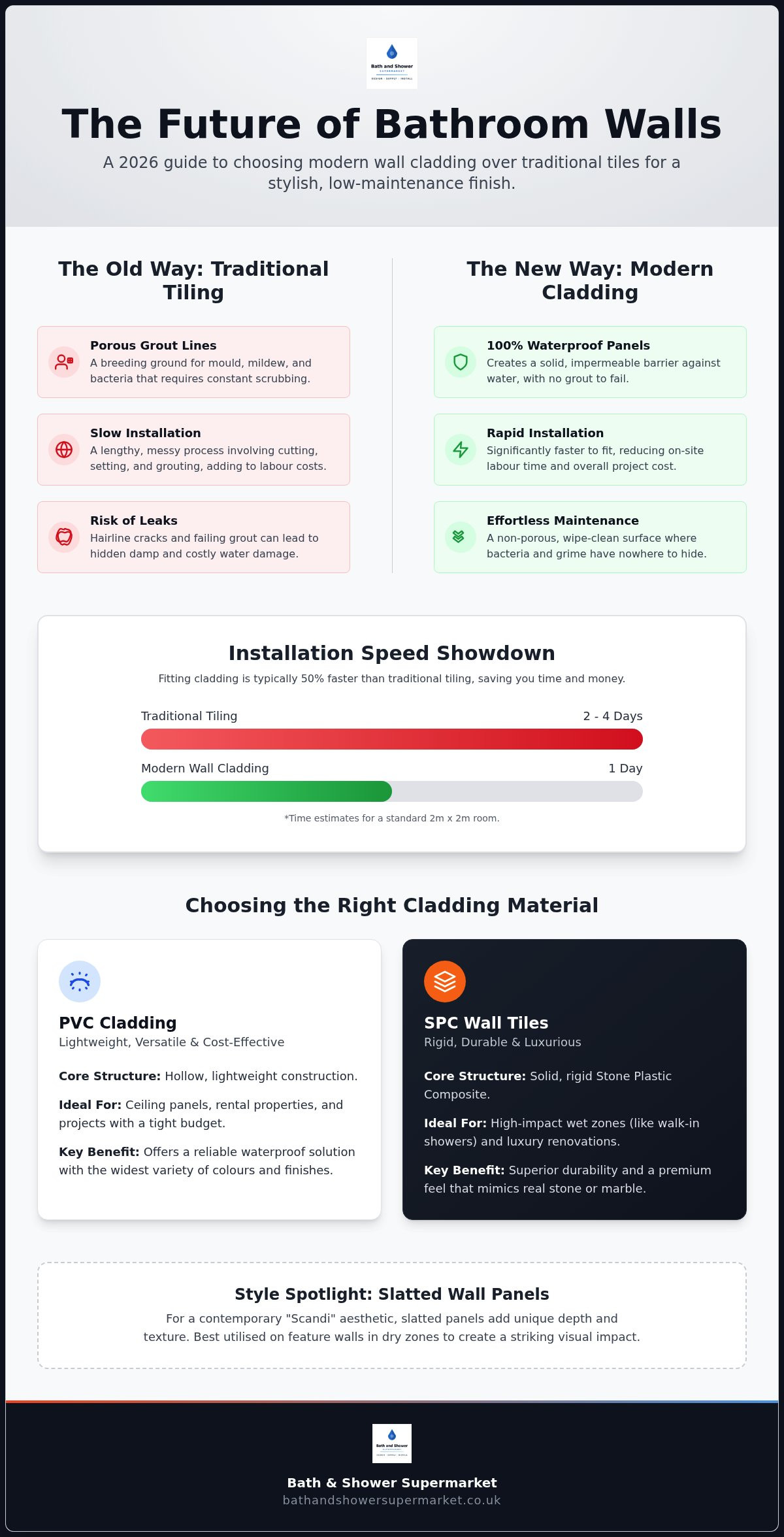
The most immediate difference is installation speed. Fitting modern SPC wall tiles or panels is typically 50% faster than traditional tiling. While a tiler might spend days measuring, cutting, and grouting individual pieces, a cladding installer can often complete a standard 2m x 2m room in a single day. This speed doesn't compromise structural integrity; in fact, these panels provide a robust layer of moisture protection that is less prone to the hairline cracks that can affect tiled surfaces over time. Maintenance is equally straightforward. You can retire the bleach and the scrubbing brush; a quick wipe with warm soapy water is all that's needed to maintain a premium finish for years.
PVC vs SPC Wall Panels: Choosing the Right Material
Selecting the right bathroom cladding requires an understanding of the core materials available. While competitors often treat all panels as identical, the functional difference between PVC and SPC is significant. Your choice will dictate the longevity, impact resistance, and final texture of your renovation. Whether you're prioritising a cost-effective refresh or a high-end architectural finish, matching the material to the environment is essential for a professional result.
When to Choose PVC Cladding
PVC (Polyvinyl Chloride) remains the industry standard for versatility and value. These panels are lightweight, easy to handle, and exceptionally cost-effective. They're the ideal choice for ceiling panels because their hollow structure prevents heavy condensation marks and simplifies the installation of recessed lighting. If you're updating a rental property or looking for a wide variety of colours and decorative "sparkle" effects, PVC provides a reliable, waterproof solution without a premium price tag.
The Rise of SPC Wall Tiles
SPC (Stone Plastic Composite) represents the next generation of bathroom cladding. Unlike hollow PVC, SPC features a solid, rigid core that provides superior structural integrity. This is the professional choice for luxury renovations where a stone-like feel is required. These panels mimic the weight and texture of real marble or slate but remain much easier to fit than traditional slabs. For those seeking the ultimate in durability, we recommend exploring our range of DCD SPC Wall Tiles to achieve a flawless, high-impact finish.
Slatted Wall Panels for Feature Walls
For homeowners aiming for a contemporary "Scandi" aesthetic, Slatted Brand Products offer a unique way to add depth and texture. These panels are best utilised in dry zones or behind vanity units to create a striking focal point. Whether you're renovating a flat in Newcastle or a family home in Morpeth, slatted textures provide a sophisticated alternative to flat surfaces. They bring a warm, architectural quality to the room while maintaining the easy-clean benefits of modern polymers.
In a direct durability check, SPC is the clear winner for high-traffic wet rooms. Its solid construction handles impact and heat better than standard PVC, making it less prone to denting or warping in busy family environments. If you aren't sure which material suits your layout, you can browse our full collection of bathroom cladding to compare finishes and technical specs side-by-side.
Selecting Your Style: Widths, Thicknesses, and Finishes
Achieving a professional result with bathroom cladding requires more than just picking a colour. You must select the correct technical specifications to ensure the material performs under daily pressure. The dimensions and finish you choose will impact the installation speed, the number of visible joints, and the overall durability of the wet zone. By understanding the logic behind panel sizing, you can create a space that is clean, cohesive, and structurally sound.
Panel widths generally fall into two categories. Standard 250mm panels are ideal for covering large wall areas or ceilings where handling ease is a priority. However, for shower enclosures, 1m "Mega" panels are the superior choice. These wide-format shower panels allow you to cover a standard shower wall with a single piece, completely eliminating internal joints where water might linger. Thickness also dictates performance. We recommend 5mm panels for ceilings to keep the weight manageable, whilst 10mm panels provide the necessary impact resistance for high-traffic wall areas.
The "Tongue and Groove" system is the engineering heart of modern cladding. These panels click together with a precision-fit connection, creating a watertight seal that prevents moisture from reaching the substrate. Whether you choose a high-gloss finish to reflect light in a small room or a sophisticated matt texture for a spa-like feel, this interlocking mechanism remains consistent. A well-fitted system ensures your walls remain easy-clean and protected for years.
Matching Cladding to Your Bathroom Suite
Your choice of wall covering should complement your fixed assets. For a contemporary aesthetic, pair marble-effect panels with black brassware and Scudo bathroom furniture. The clean lines of a Scudo vanity unit sit perfectly against the solid, stone-like texture of concrete-effect SPC tiles. To complete the look, ensure you coordinate your walls with waterproof bathroom flooring. This creates a fully integrated, tanked environment that is as stylish as it is functional.
Trims and Finishing Touches
Professional trims are the difference between a DIY look and a high-end installation. End caps, internal corners, and H-joints are essential for masking cut edges and reinforcing the watertight integrity of the system. You should choose trims that match your existing fixtures; chrome remains a classic choice, whilst black or white trims can provide a bold, modern contrast to your taps and towel radiators. These components aren't merely decorative; they are vital structural elements that ensure a long-lasting, professional finish.
Installation and Logistics: Fitting Cladding in Your Home
Installing bathroom cladding is a practical, efficient project that significantly reduces the mess associated with traditional renovations. One of the most frequent questions we receive is whether you can fit these panels directly over existing tiles. The answer is yes, provided the original surface is sound, flat, and securely bonded to the wall. If your tiles are loose or "blown," they must be removed to ensure the adhesive has a stable substrate to grip. Before ordering, always calculate your wall area and add a 10% wastage factor to account for corner cuts and pipework adjustments.
Success depends on using the correct equipment. You will need a fine-tooth saw to achieve clean, burr-free edges, along with a high-grab adhesive and premium anti-fungal silicone sealant. Whilst the process is straightforward enough for a confident DIYer, many homeowners prefer the peace of mind that comes with a professional touch. If you want a flawless, guaranteed finish, booking a professional installation in Newcastle or Whitley Bay ensures every joint is perfectly aligned and watertight.
The 5-Step Installation Process
A methodical approach is essential for a leak-free result. Follow these core steps for a professional standard fitting:
- Preparation: Clean the walls thoroughly to remove soap scum. Remove any existing fixtures like shower heads, taps, or towel rails.
- Cutting: Measure your heights and widths precisely. Use your fine-tooth saw to cut the panels to size, working from the decorative face to prevent splintering.
- Adhesion: Apply high-grab adhesive in a consistent zig-zag pattern across the back of the panel to ensure maximum surface contact.
- Sealing: This is the critical step. Run a bead of silicone sealant into the groove of each panel before clicking the next one into place to create a waterproof barrier.
- Finishing: Fit your corner and end trims to hide raw edges and provide a clean, polished look that matches your brassware.
Maintenance and Aftercare
Modern bathroom cladding is designed for longevity, typically offering 10-15 years of high performance in a busy household. To maintain the finish, avoid abrasive cleaners or scouring pads that can dull the surface over time. A simple "wipe-down" routine using warm soapy water and a soft cloth is sufficient to prevent soap scum build-up. This no-nonsense maintenance schedule keeps your bathroom looking pristine without the need for harsh chemicals or hours of scrubbing.
If you are planning a full room transformation, you can coordinate your new walls with our complete range of bathroom packages for a seamless, expertly fitted result.
Why Source Your Bathroom Cladding from Bath & Shower Supermarket?
Choosing a supplier is as vital as selecting the material itself. Bath & Shower Supermarket operates as a stable, high-volume specialist, providing the reliability required for major home improvements. We don't just move boxes; we offer a curated selection of premium brands including Scudo and Kartell. Our Northumberland-based team possesses the technical expertise to advise on UK plumbing standards, ensuring your bathroom cladding integrates perfectly with your existing setup. We prioritise clarity and consumer confidence, acting as a dependable guide through the selection process.
Logistical mastery defines our service. We hold over 3,000 products in stock at our Morpeth warehouse, facilitating fast, reliable delivery across the UK. This preparedness ensures your project remains on schedule without the delays common in the retail sector. By sourcing your bathroom packages and wall panels from one location, you eliminate the friction of coordinating multiple deliveries and varying quality standards. Everything arrives from a single, verified source.
The Full Renovation Solution
Achieving a cohesive, professional aesthetic is simpler when you combine our SPC wall tiles with high-quality wetroom screens. This creates a fully tanked, waterproof environment that is built for longevity and impact resistance. As authorised retailers, we provide authentic goods backed by full manufacturer guarantees, giving you peace of mind regarding structural integrity. For residents in the North East, our bathroom refit services in Newcastle offer a professional, no-nonsense route to a completed renovation, handled by experts who understand our product range inside out.
Visit Our Showroom or Shop Online
We serve the entire North East region, from Alnwick to Durham and everywhere in between. Our online platform features a secure checkout with transparent shipping rates, reflecting our commitment to efficiency and straightforward service. If you are managing a large-scale renovation or a commercial project, contact our team for a bespoke quote. We provide the meticulous planning and structural advice necessary to move your project from a broad need to a specific, high-end solution. Whether shopping online or visiting our showroom, you receive the same authoritative guidance and logistical speed.
Upgrade Your Bathroom with Professional Grout-Free Walls
Modern bathroom renovations in 2026 prioritise efficiency, hygiene, and durability. By moving away from traditional tiling, you eliminate the constant maintenance of grout and the risk of mould build-up. Whether you choose lightweight PVC for your ceiling or high-impact SPC wall tiles for your shower, the result is a seamless, waterproof environment. Precision engineering meets sophisticated design. It's a straightforward solution for those who desire a premium finish without the logistical hassle of traditional trades.
As an authorised UK retailer for Scudo and Kartell, we provide the technical quality required for a professional-standard renovation. We maintain over 3,000 products in stock to ensure fast UK-wide delivery from our Morpeth warehouse. For homeowners in Newcastle and across the North East, our expert local installation team provides a guaranteed, watertight service. Choosing high-quality bathroom cladding is the most effective way to secure a maintenance-free future for your home.
Ready to transform your space? Shop the full range of Bathroom Cladding and SPC Wall Tiles at Bath & Shower Supermarket today. Your durable, stylish, and easy-clean bathroom is ready for you.
Frequently Asked Questions
Is bathroom cladding cheaper than tiling?
Yes, bathroom cladding is generally more cost-effective because it reduces installation time. In the UK, labour represents a significant portion of renovation budgets. Professionals in Newcastle or Alnwick can fit panels much faster than traditional tiles, which require individual spacing and grouting. This speed lowers the overall project cost whilst providing a durable, waterproof finish that doesn't require the expensive maintenance associated with failing grout lines over time.
Can I use bathroom wall panels in a shower enclosure?
Absolutely. Large-format shower panels are designed specifically for wet zones. For a standard enclosure in Whitley Bay or Durham, we recommend 1m wide panels to cover the walls with minimal joints. This creates a seamless, watertight barrier. When paired with our wetroom screens, these panels provide a high-end look that is far more resistant to moisture penetration than traditional tiled surfaces in high-pressure shower environments found in modern homes.
Do bathroom wall panels need grout?
No, bathroom cladding is a completely grout-free solution. The panels feature a precision-engineered tongue and groove system that clicks together. To ensure a 100% waterproof seal, a bead of anti-fungal silicone is applied within the joint during installation. This eliminates the porous lines where mould typically grows, making it a much more hygienic choice for homeowners across Tyne & Wear who want an easy-clean bathroom without the scrubbing.
Can you put bathroom cladding over existing tiles?
Yes, you can install cladding directly over existing tiles provided they are sound and securely attached to the wall. This is a popular renovation method in Northumberland because it avoids the mess of "hacking off" old ceramics. If the tiles are level, you simply apply a high-grab adhesive to the back of the panel. If the surface is uneven, a simple timber batten system can be used instead to provide a flat substrate.
How long do shower wall panels last?
You should expect high-quality shower wall panels to last between 10 and 15 years. Their lifespan depends on the material chosen and the quality of the initial installation. SPC wall tiles offer superior longevity due to their rigid stone-composite core, which resists impacts and temperature fluctuations better than standard PVC. We provide authorised retailer guarantees on brands like Scudo and Kartell to ensure long-term peace of mind for our UK customers.
Is PVC or SPC cladding better for a family bathroom?
SPC is the superior choice for busy family bathrooms in Kingston Park or Morpeth. While PVC is excellent for ceilings, SPC features a solid core that provides much higher impact resistance against daily wear and tear. It won't dent easily if knocked by children's toys or step stools. Its rigid construction also provides a more premium, stone-like feel that maintains its structural integrity for longer in high-traffic households across the North East.
How do I clean my bathroom cladding without damaging it?
Cleaning is straightforward and requires no harsh chemicals. Use warm soapy water and a soft cloth to wipe down the surfaces regularly. This prevents soap scum and limescale from building up. You must avoid abrasive cleaners, scouring pads, or bleach, as these can dull the decorative finish of the panels. This simple maintenance routine is enough to keep your installation looking pristine for years without the need for the intense scrubbing required by tiles.
Can bathroom cladding be used on the ceiling?
Yes, panels are an ideal material for ceilings. PVC options are specifically recommended for this purpose because they are lightweight and easy to handle during overhead installation. They help prevent condensation marks and protect structural timbers from steam damage. Many of our customers in Alnwick and Kingston Park use 5mm thick gloss white panels to brighten the room and provide a clean, wipeable surface that never requires repainting like traditional plaster.


