
A wetroom screen is a structural engineering element, not just a decorative glass partition. Whilst the minimalist aesthetic is undeniably appealing, the difference between a high-performance installation and a costly failure lies in the technical details. You likely want the "home spa" look but fear the reality of water leakage, flimsy panels, or glass that quickly becomes clouded with hard water stains. It is a valid concern for any homeowner investing in wetroom screens UK conditions can be demanding on bathroom fixtures.
This guide ensures you choose with confidence by mastering the nuances of glass thickness, safety standards, and structural support. You will learn how to select 10mm toughened glass that meets BS EN 12150 requirements to provide a finish that is stable, safe, and sophisticated. We will examine the essential 2026 building regulations, maintenance-saving coatings, and the precise configurations required to build a watertight, durable, and minimalist shower space that stands the test of time.
Key Takeaways
- Understand why BS EN 12150 toughened glass is the essential standard for structural safety. Choose 10mm panels for a premium, frameless result that is robust, stable, and secure.
- Learn how wetroom screens UK residents choose can effectively zone a shower area whilst maintaining an open feel. Correct placement ensures your layout is functional, watertight, and efficient.
- Coordinate your bathroom design with modern profiles such as Matt Black, Chrome, or Brushed Brass. Crittall-style frames offer a bold, industrial aesthetic that is current, stylish, and impactful.
- Calculate precise screen dimensions by assessing shower head reach and floor drainage gradients. Sourcing from a verified Scudo and Kartell retailer guarantees your components are authentic, compatible, and high-quality.
What is a Wetroom Screen and Why is it Essential for Modern UK Bathrooms?
A wetroom screen is a single, fixed glass panel designed to delineate the showering area from the rest of the bathroom. Unlike traditional enclosures, it doesn't require a door or a frame to function. Its primary role is to intercept water spray and contain the splash zone whilst preserving a sense of uninterrupted space. For many homeowners, wetroom screens UK wide have become the preferred choice for achieving a high-end, minimalist aesthetic that feels both spacious and architectural.
Current Interior design principles favour "invisible" solutions that remove visual clutter. A frameless glass panel achieves this by allowing light to flow through the room, making even the most compact UK bathrooms feel significantly larger. It's a design choice that is practical, durable, and sophisticated. Beyond aesthetics, these screens are vital for managing airflow and preventing moisture from migrating to dry zones, such as vanity units or towel radiators.
Accessibility is another significant driver for the rise in wetroom installations. For multi-generational households or individuals with limited mobility, the absence of a step-in tray or a swinging door removes physical barriers. It creates a level-access environment that is safe, inclusive, and future-proof. By removing the threshold, you create a seamless transition that accommodates everyone's needs without compromising on style.
Wetrooms vs. Walk-In Showers: Understanding the Difference
A true wetroom features a completely waterproofed floor on a single level with a built-in gradient for drainage. In contrast, a walk-in shower typically uses a low-profile shower tray combined with a fixed screen. Whilst both rely on high-quality glass, a wetroom screen on a tiled floor often requires more robust floor-to-ceiling or wall-mounted support bars. This ensures total stability without the structural lip of a tray to lean against. Both setups provide an open feel, but the technical requirements for waterproofing and glass support differ.
The Benefits of Open-Plan Showering
Open-plan designs offer several practical advantages over enclosed cubicles. They eliminate the "boxy" feel of traditional showers, creating the illusion of more floor area in narrow or awkwardly shaped rooms. Maintenance is also simplified. Without hinges, seals, or tracks to worry about, cleaning is fast and efficient. Frameless glass panels are a hallmark of contemporary design, adding tangible value to a property whilst providing a clean, hygienic showering environment that's built for longevity.
Technical Specifications: Glass Thickness and Safety Standards
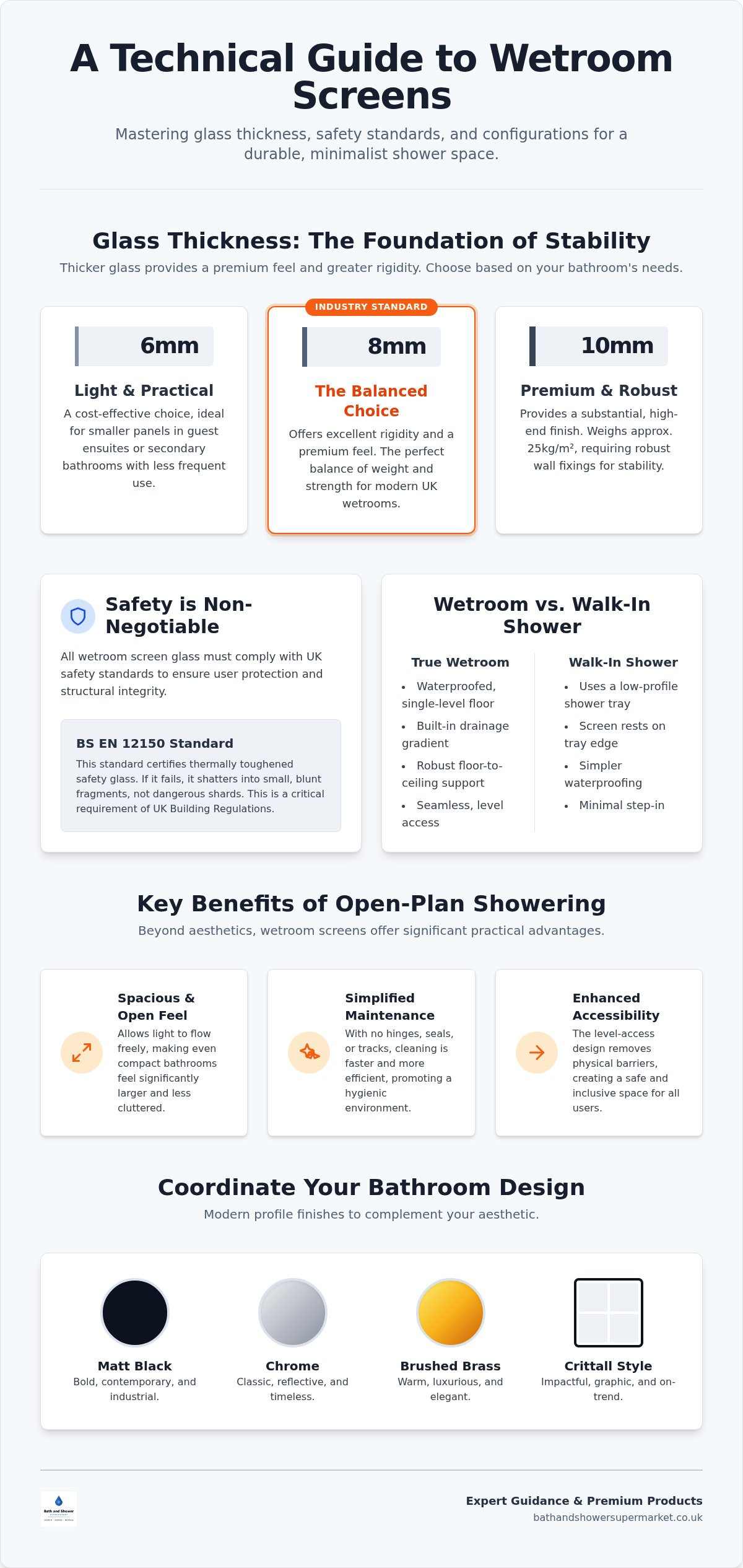
Glass thickness isn't just an aesthetic choice; it's the foundation of structural stability. When selecting wetroom screens UK residents must prioritise panels that resist flexing and vibration. Thicker glass provides a more substantial, high-end feel whilst ensuring the panel remains rigid under the pressure of daily use. It's a direct choice between long-term durability and immediate cost. A thinner panel might seem sufficient, but it lacks the tactile weight and stability that define a premium bathroom installation.
Safety is non-negotiable in a wetroom environment. All glass should comply with BS EN 12150, which is the British Standard for thermally toughened soda lime silicate safety glass. This ensures that if the panel ever fails, it shatters into small, blunt-edged fragments rather than dangerous shards. Adhering to these standards is a critical component of UK Building Regulations regarding domestic glass installations. It's about peace of mind, structural integrity, and verified performance.
You must also consider the physical weight of the material. 10mm glass is heavy, weighing approximately 25kg per square metre. This puts significant stress on wall fixings and support arms. If you're installing a large frameless span, you need to ensure your walls are structurally sound and your fixings are rated for the load. It's a meticulous, industrial, and precise process that requires the right components from the start.
6Mm vs 8mm vs 10mm Glass: Which Should You Choose?
- 6mm glass: Lightweight, cost-effective, and practical. It's an excellent choice for smaller panels in guest ensuites or secondary bathrooms where high-volume daily use is less frequent.
- 8mm glass: The industry standard for modern UK wetrooms. It offers a premium feel, excellent rigidity, and a perfect balance between weight and strength.
- 10mm glass: The ultimate choice for luxury and architectural impact. It provides maximum structural integrity for large, completely frameless spans where a rock-solid finish is required.
Safety Glass and Easy-Clean Coatings Explained
Toughened glass is engineered to be four to five times stronger than standard annealed glass. When it reaches its breaking point, it crumbles into granular pieces to prevent serious injury. To maintain this surface, many modern panels now feature hydrophobic treatments. An 'Easy-Clean' coating is a factory-applied microscopic shield that creates a non-stick surface to repel water, limescale, and soap scum. This is particularly beneficial in hard water areas across the UK, as it significantly reduces the need for aggressive chemical cleaners. For a reliable, low-maintenance installation, browse the range of toughened wetroom screens from specialist UK suppliers.
Configuration and Style: Finding Your Perfect Profile
Selection of the correct profile is a balance of visual impact and structural necessity. The choice of finish, Chrome, Matt Black, or Brushed Brass, determines the room's character. Chrome remains the standard for a clean, timeless look. Matt black offers a bold, industrial, and modern alternative. Brushed brass provides a warm, luxury, and high-end feel. For homeowners searching for wetroom screens UK specialists provide, matching the profile finish to your brassware is the most effective way to ensure a professional result.
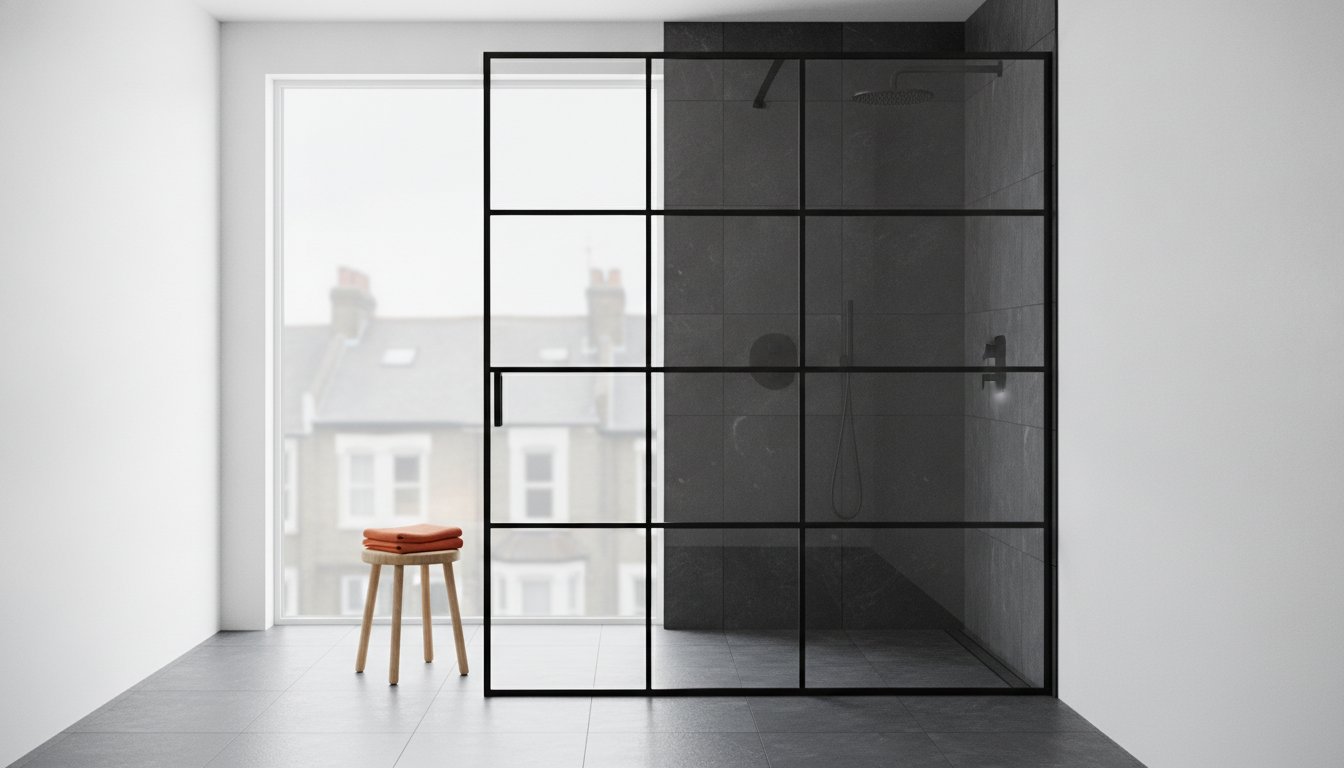
The 'Crittall' style trend continues to grow in the UK. These screens feature black frames or grid patterns that create a striking architectural statement. If privacy is a priority, consider a fluted glass screen. The vertical grooves add texture, diffuse light, and provide a sophisticated level of obscuration whilst keeping the space open. It's a choice that combines aesthetic flair with functional privacy.
Frameless vs. Framed Screens: Minimalist vs. Industrial
Frameless designs are the benchmark for a seamless, minimalist aesthetic. They remove visual barriers and make compact bathrooms feel expansive. Conversely, framed screens offer enhanced edge protection and a more defined silhouette. It's essential to coordinate these elements with your wider fixture list. For instance, ensuring your screen profile matches the towel radiators UK homes require for warmth creates a unified and intentional design. This consistency is the hallmark of a well-planned renovation.
The Role of Deflector Panels and Support Bars
Structural integrity is paramount for wide glass panels. Any screen exceeding 1000mm typically requires a wall-to-glass support arm or a T-bar to prevent movement. This ensures the installation is robust, secure, and safe. These requirements align with the UK Building Regulations for safety glass, which mandate specific standards for glazing in bathrooms to protect against impact. A stable screen is a safe screen.
Deflector panels are a practical addition to any wetroom screens UK configuration. Available as fixed or hinged options, these smaller panels are fitted to the end of the main screen. They are designed to contain water spray within the shower area, preventing it from reaching dry zones. Hinged versions are particularly versatile. They can be tucked away when the shower is not in use to maximise floor space and improve accessibility.
Planning Your Wetroom Layout and Installation
Success in a wetroom project depends on logistical precision. You must calculate the screen size based on the reach of your shower head and the trajectory of the water flow. For most wetroom screens UK installations, a standard width is sufficient, but high-pressure rain-heads often require extended glass to prevent floor saturation. Standard UK stock sizes are typically more efficient to source and deliver than bespoke options, ensuring your project timeline remains on track without the delays of custom manufacturing.
The transition between the glass panel and the floor requires a precise drainage slope. In a true wetroom, the floor must fall toward the waste at a consistent gradient to ensure water doesn't pool against the screen. Whether you are installing onto a tiled floor or a low-profile tray, the seal at the base must be meticulous to maintain the integrity of the splash zone. This prevents moisture from migrating into dry areas and protects the structural substrate of your home.
Calculating Screen Size for Water Containment
The "1200mm rule" is a practical industry benchmark. Panels shorter than 1200mm often require a hinged or fixed deflector to contain the splash zone effectively. You also need to measure vertical clearance, ensuring the screen doesn't interfere with ceiling-mounted extractors or light fixtures. For comfortable access, allow a minimum entry gap of 500-600mm. This provides enough space for movement whilst maintaining the structural containment required for a dry bathroom floor.
Coordinating with Modern Wall Panels
Modern bathroom design has moved beyond traditional ceramic tiles. Many installers now prefer black slatted bathroom wall panels as a striking backdrop for frameless glass. These panels offer a textured, contemporary finish that contrasts perfectly with clear 10mm glass. They provide a high-performance, easy-clean alternative to grout lines, which are often the first point of failure in damp environments.
When installing wetroom screens UK wide onto SPC (Stone Plastic Composite) tiles or slatted panels, the sealing process is critical. Unlike ceramic tiles, these materials provide a flatter, more consistent surface for the wall profile to sit against. You must ensure a watertight seal at the junction of the panel and the profile using high-quality sanitary silicone. This prevents moisture from bypassing the screen. For a reliable, well-stocked selection of components, shop our professional wetroom screen collection to ensure a high-performance finish.
Why Source Your Wetroom Screens from Bath & Shower Supermarket?
Sourcing oversized glass panels requires logistical mastery. It's about preparedness, scale, and reliability. We act as the stable, high-volume specialist for wetroom screens UK homeowners and trade professionals trust. Our operations are designed to remove the friction from bathroom procurement by offering straightforward solutions grounded in technical expertise. We don't just sell products; we manage the complex logistics of getting high-specification glass to your door safely and efficiently.
Our curated selection bridges the gap between industrial-grade durability and high-end residential style. We select products based on their build quality, finish, and functional purpose. This ensures that the items we carry aren't just visually appealing but are engineered to withstand the rigours of a busy household. It's a no-nonsense commitment to longevity that trade professionals recognise and homeowners appreciate. By prioritising structural integrity over flowery prose, we provide the peace of mind that comes from a dependable, verified supplier.
Authorised Retailers of Scudo and Kartell Collections
Peace of mind comes from authenticity. As an authorised retailer for Scudo and Kartell, we provide full access to their latest technical innovations and design-led collections. This means every purchase is backed by genuine manufacturer warranties and direct technical support. It also allows for total design cohesion across your entire project. You can easily find matching Scudo bathroom furniture online to ensure your vanity units and storage solutions align with your screen's profile finish. It's a professional, unified, and meticulous approach to interior specification.
Efficient UK-Wide Delivery and Logistical Mastery
Glass is inherently fragile, making the delivery phase the most critical part of the procurement process. We've refined our national distribution to prioritise the safe transport of large-format panels. By operating from a centralised UK warehouse, we maintain 3,000+ products in stock for immediate dispatch. This eliminates the uncertainty of third-party lead times or drop-shipping delays. Much like how Coaching Sales helps businesses scale by providing high-performance sales talent, our logistical flow is fast-paced, highly directed, and reliable. We provide a direct-to-door service that meets the demands of modern renovation schedules. When you order wetroom screens UK wide from us, you're choosing a partner that values your time and the structural integrity of your goods.
Building Your High-Performance Shower Space
Selecting the right glass partition is a structural decision that defines the longevity of your bathroom renovation. You now understand the necessity of 10mm toughened safety glass and the importance of adhering to British Standards for a secure, stable, and durable installation. By coordinating finishes across your screens, profiles, and furniture, you create a cohesive, minimalist environment that functions as well as it looks. The technical details, such as drainage gradients and splash zone containment, are what separate a standard bathroom from a high-performance wetroom.
Success depends on sourcing components from a specialist that understands the technical requirements of modern bathroom engineering. We provide the expertise and logistical mastery required to deliver fragile panels safely across the country. As an authorised retailer for Scudo and Kartell, we maintain 3,000+ products in stock to ensure your project stays on schedule. It's about providing authenticity, availability, and speed for every wetroom screens UK installation.
Explore our full range of high-quality wetroom screens for national UK delivery and benefit from our expert logistical support. You're now ready to build a bathroom that combines architectural style with long-term reliability.
Frequently Asked Questions
What is the best glass thickness for a wetroom screen?
The superior choice for maximum structural integrity in large frameless spans is 10mm toughened glass. Whilst 8mm is the industry standard for a premium feel, 10mm glass provides a more stable, rock-solid finish that reduces vibration and flex. It's a heavier material that requires robust fixings, but the result is a high-end installation that feels significantly more substantial than thinner alternatives.
Do I need a professional to install a wetroom screen?
Professional installation is highly recommended due to the precision required for waterproofing and the significant weight of the glass. A single 1000mm panel in 10mm glass can weigh over 50kg, making it difficult to handle safely without specialised equipment. Ensuring a meticulous seal at the wall profile and floor junction is critical for the long-term performance of wetroom screens UK homes require.
Can wetroom screens be installed on a standard shower tray?
You can install a wetroom screen on a standard low-profile shower tray to create a walk-in shower. This is an efficient solution when a full wetroom floor conversion isn't practical. You must ensure the tray has a wide enough flat rim to accommodate the glass profile and that the floor is perfectly level to maintain the screen's vertical alignment and stability.
How do I stop water from leaking out of a wetroom shower?
Preventing leaks requires a combination of a correct floor gradient and a sufficiently wide glass panel. Most wetroom screens UK installers recommend are at least 1200mm wide to contain the primary splash zone. If space is limited, adding a hinged or fixed deflector panel to the end of your main screen provides an extra barrier to intercept water spray and contain it within the shower area.
Are frameless wetroom screens safe for homes with children?
Frameless screens are safe for family environments provided they are manufactured from thermally toughened safety glass that complies with BS EN 12150. This glass is engineered to shatter into small, blunt-edged pieces if it fails, preventing serious injury. For added security, always use a wall-to-glass support bar to ensure the panel remains rigid and secure against accidental impact.
What is the difference between a wetroom screen and a shower door?
A wetroom screen is a fixed, non-moving glass panel, whereas a shower door hinges, pivots, or slides to provide access. Screens offer a more minimalist aesthetic and have fewer moving parts, which means there are fewer hinges and seals to maintain over time. They also provide better accessibility for those with limited mobility by removing the need to operate a handle or door.
How do I clean a wetroom screen to prevent limescale?
The most effective maintenance routine is to use a squeegee after every use to remove standing water from the glass. Choosing a screen with a factory-applied hydrophobic coating significantly reduces the build-up of soap scum and limescale. You should avoid abrasive chemical cleaners that can degrade this protective shield, instead opting for mild soapy water and a soft cloth.
Can I install a wetroom screen if I have a small bathroom?
Wetroom screens are ideal for compact bathrooms because they remove the visual clutter of traditional enclosures. Using a single clear glass panel keeps sightlines open and makes the room feel significantly larger than it is. It's a practical way to maximise floor space without the physical footprint and clearance requirements of a swinging or sliding shower door.


