
A beautiful bathroom floor is a liability if it isn't structurally impervious to water. You deserve a sanctuary that maintains its integrity against steam, splashes, and heavy foot traffic. We understand the frustration of choosing between aesthetic appeal and functional durability. You want a high-end finish that doesn't succumb to mould, warping, or structural rot. This guide identifies the best waterproof flooring for bathrooms in 2026, focusing on Stone Plastic Composite (SPC) technology and professional installation standards.
Discover how to transform your space into a long-lasting, watertight environment. We provide a comprehensive, done-for-you service that bridges the gap between premium supply and technical execution. We will compare Stone Plastic Composite (SPC) against Luxury Vinyl Tile (LVT), clarify British installation standards, and help you select a finish that perfectly complements modern Scudo furniture. Expect a transition from confusing material specs to a professional, hassle-free result. Our expertise ensures your new floor is durable, stylish, and entirely moisture-resistant. This is the definitive path to a reliable, expert-grade bathroom renovation.
Key Takeaways
- Distinguish between water-resistant and 100% waterproof materials to protect your home from structural moisture damage and mould.
- Identify why Stone Plastic Composite (SPC) is the best waterproof flooring for bathrooms, offering unmatched rigidity and stability in steamy environments.
- Master the essential pre-installation requirements, from assessing subfloor levelness to calculating precise wastage for a seamless finish.
- Discover the benefits of an end-to-end supply and fit model that combines premium material procurement with expert technical installation.
Understanding Bathroom Flooring: What Does Waterproof Actually Mean?
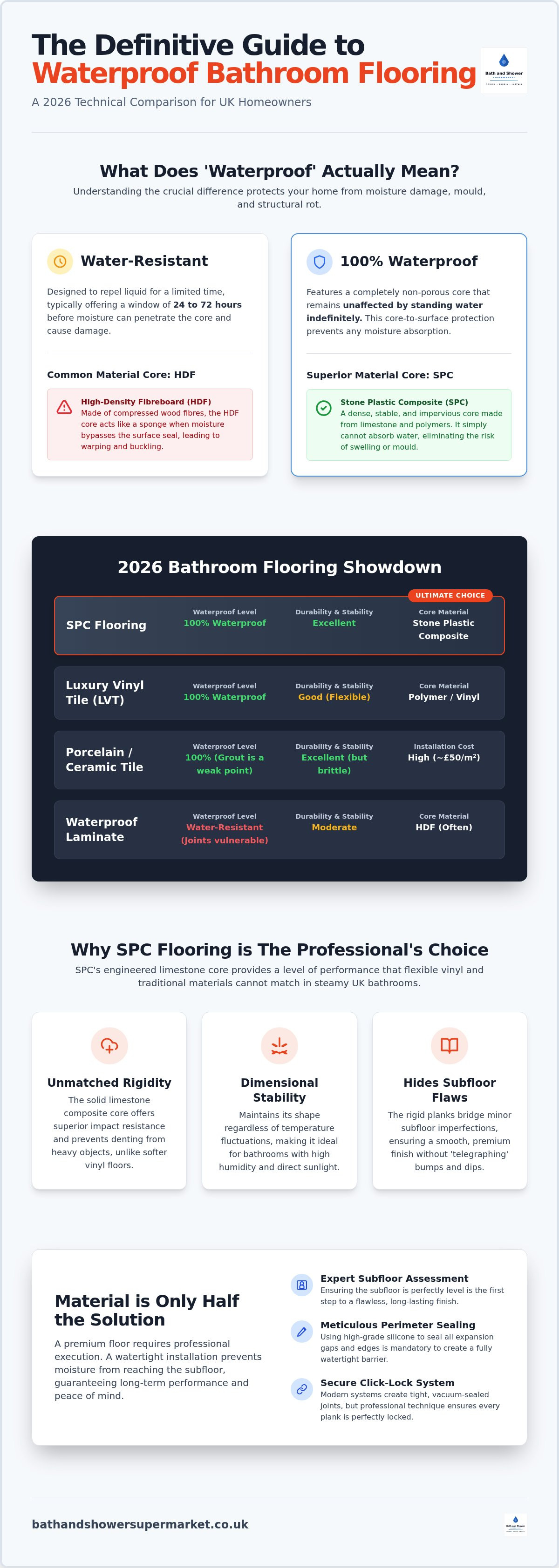
Clarity is essential when investing in your home. In the flooring industry, terminology is often used loosely; however, there is a vital technical distinction between water-resistant and fully waterproof materials. To understand what waterproof actually means, you must look beyond the surface. A truly waterproof product remains structurally sound even when submerged. It does not swell, warp, or lose its bond. For those seeking the best waterproof flooring for bathrooms, the goal is total core-to-surface impermeability. This ensures your subfloor remains dry, protected, and free from structural rot.
Traditional laminate often fails in British bathrooms because its core is composed of High-Density Fibreboard (HDF). This material is essentially compressed wood fibres. When moisture bypasses the surface seal, the HDF core acts like a sponge. This leads to blown joints and unsightly buckling. Modern engineering has replaced these porous cores with Stone Plastic Composite (SPC) and advanced polymers. These materials are dense, stable, and impervious. They provide the peace of mind that comes from a floor that simply cannot absorb water, regardless of humidity or spills.
Water-Resistant vs. Fully Waterproof
Water-resistant flooring is designed to repel liquid for a limited time, typically providing a window of 24 to 72 hours before damage occurs. This is often insufficient for family bathrooms where steam is constant and puddles are common. Fully waterproof flooring, such as SPC, features a non-porous core that remains unaffected by standing water indefinitely. This core-to-surface protection is the only way to prevent long-term dampness from compromising your floor's structural integrity. Choosing a 100% waterproof material is a proactive decision that eliminates the risk of mould growth beneath your planks.
The Importance of a Watertight Seal
The material itself is only half of the solution. A successful installation requires a meticulous, watertight seal around the entire room. Modern click-lock systems are engineered to create tight, vacuum-sealed joints that prevent water ingress between planks. However, the perimeter remains a vulnerable point. Professional sealing with high-grade silicone is mandatory to protect the expansion gaps required in any installation. At Bath & Shower Supermarket, we advocate for a comprehensive supply and fit model. This ensures that every joint is locked and every edge is sealed by experts who understand technical execution. A professional installation provides a reliable, durable, and watertight sanctuary that DIY efforts often fail to achieve.
Comparing the Top Waterproof Flooring Options for 2026
Selecting the best waterproof flooring for bathrooms requires a balance of technical performance and aesthetic longevity. In 2026, the UK market offers four primary categories: Luxury Vinyl Tile (LVT), Stone Plastic Composite (SPC), traditional ceramics, and waterproof laminate. While sheet vinyl remains a budget-friendly entry point starting from £6.99 per square metre, it lacks the structural integrity required for premium renovations. Conversely, porcelain tiles are a classic choice but involve high labour costs, often around £50 per square metre for installation alone. Waterproof laminate serves as a middle ground; however, it remains vulnerable at the joints if the surface seal is compromised.
Modern engineering has shifted the focus toward rigid cores. SPC flooring is a high-performance newcomer that addresses the weaknesses of its predecessors. It is dense, stable, and impervious. While LVT offers flexibility, it can sometimes struggle with dimensional stability in rooms with significant temperature swings. By contrast, SPC maintains its shape regardless of environmental stress. For homeowners seeking a long-term solution, the choice often narrows down to the specific technical benefits of these advanced vinyl options.
LVT vs. SPC: Which Vinyl Wins?
LVT has long been the standard for comfort and variety. It is flexible, warm, and relatively easy to install. However, SPC is rapidly becoming the professional's choice due to its rigid limestone core. This core provides superior impact resistance and dimensional stability. Unlike traditional flexible vinyl, SPC does not telegraph subfloor imperfections. It remains stable under fluctuating temperatures, which is critical in steamy UK bathrooms. When examining industry testing standards, it is clear that the rigid core of SPC offers a level of durability that flexible LVT cannot match. Installation speed also favours SPC; its click-system is often faster to deploy than the glue-down methods frequently required for high-traffic LVT applications.
The Case for Modern Materials over Tiles
Traditional tiling is frequently chosen for its aesthetic, but it introduces a significant maintenance burden. Grout is porous. It attracts mould, discolours over time, and requires aggressive cleaning. By choosing SPC Bathroom Flooring, you eliminate these vulnerabilities entirely. SPC offers a seamless, non-porous surface that is warmer underfoot and significantly quieter than ceramic. From a logistical standpoint, the click-system installation of SPC is faster and cleaner than the multi-day process required for professional tiling. This makes it a more cost-effective solution for modern homeowners who value efficiency and hygiene. To ensure your chosen material performs as intended, consider our professional installation service to guarantee a watertight finish.
Why SPC Flooring is the Ultimate Choice for Modern Bathrooms
Stone Plastic Composite (SPC) represents the peak of modern material engineering. It is a rigid, stable, and entirely waterproof solution designed to withstand the unique pressures of the British bathroom environment. At its heart is a high-density limestone core. This core provides the structural backbone that allows SPC to outperform traditional flexible vinyl. When looking for the best waterproof flooring for bathrooms, temperature tolerance is a primary concern. Unlike standard LVT, SPC won't expand or contract significantly in hot, steamy conditions. It remains dimensionally stable, ensuring your joints stay tight and leak-free for years.
Luxury and safety are equally prioritised. SPC flooring is naturally compatible with modern underfloor heating systems, providing a warm, comfortable surface that ceramic tiles lack. For young families or elderly users, slip resistance is non-negotiable. High-quality SPC often carries an R10 rating or higher, offering superior grip even when wet. This combination of technical resilience and daily comfort makes it the definitive choice for any professional renovation. Our specialists ensure that every plank is laid with precision, maximising the functional benefits of this industrial-grade material.
Structural Integrity and Durability
The high-density limestone core is more than just a waterproof barrier; it is a shield against physical damage. Bathroom furniture, such as heavy vanity units or cast iron baths, can leave permanent indentations on softer flooring. SPC is resistant to these pressure points, maintaining a perfectly level surface. Its wear layer is equally robust, providing a scratch-resistant finish that handles high-traffic households with ease. This is a long-term investment in durability that traditional materials simply cannot match. It is built to last, easy to clean, and structurally sound.
Design Versatility and Aesthetics
Technological advancements mean you no longer have to sacrifice style for function. Modern SPC planks feature ultra-realistic wood and stone effects that are indistinguishable from natural materials. This allows you to create a high-end aesthetic without the porous maintenance issues of natural timber or marble. For a cohesive interior, many homeowners choose to pair their floor with Scudo bathroom furniture. The clean lines of a Scudo vanity against a stone-effect SPC floor create a seamless, contemporary look. By matching your flooring with SPC wall tiles, you can achieve a sleek, monolithic finish that makes even small bathrooms feel spacious and well-organised.
Key Considerations Before You Organise Your Installation
Success depends on preparation. Even the best waterproof flooring for bathrooms won't perform if the foundation is flawed. You must assess subfloor levelness and moisture levels before any material arrives on-site. In many UK homes, you will encounter uneven floorboards or pitted concrete. These surfaces require levelling to prevent joint stress. We recommend a 10% wastage allowance for standard rooms; however, complex layouts with alcoves often require 15% to ensure a seamless finish. This technical foresight prevents delays and guarantees a professional result.
Subfloor Preparation for a Perfect Finish
A flat subfloor is essential for click-lock systems. These joints are precision-engineered to provide a watertight seal. If the floor dips or peaks, the click-lock mechanism is under constant tension. This leads to premature wear or joint failure. Professional subfloor priming is necessary for concrete to suppress dust and improve the bond of any perimeter adhesives. Our professional installation service includes a full subfloor assessment to identify these issues early. We provide a complete supply and fit solution that removes the stress of technical preparation.
Acoustics and Thermal Comfort
Modern SPC flooring often features an integrated underlay. This design choice provides immediate thermal benefits and simplifies the logistics of your renovation. It helps retain heat whilst providing a vital moisture barrier for the structure below. Acoustic performance is also a priority for upper-floor bathrooms. High-quality bathroom flooring should achieve an acoustic reduction rating of at least 18dB to effectively dampen the sound of footfall. This ensures a quiet, premium feel throughout the home.
Planning the transitions between your bathroom and hallway is the final logistical hurdle. Threshold strips should match your flooring for a cohesive, architectural look. Our end-to-end model ensures every detail is managed, from initial measurements to the final seal. To secure a durable and stylish finish, browse our SPC flooring collections and professional fitting services.
Professional Supply and Installation: The Bath & Shower Supermarket Service
Peace of mind comes from a single point of responsibility. We provide an end-to-end service that eliminates the risk of using separate suppliers and fitters. By managing both the procurement and the physical setup, we ensure your flooring is handled with technical precision from start to finish. Our logistics are streamlined, efficient, and reliable. Leveraging our advanced logistics network, we ensure fast UK delivery to keep your renovation on schedule. This integrated approach is the most effective way to secure the best waterproof flooring for bathrooms without the logistical stress.
Our installation team focuses on the critical details that DIY projects often miss. We ensure a 100% watertight finish by applying professional-grade seals at every perimeter and transition. This meticulous, industrial, and authoritative approach guarantees that your investment is protected against moisture for the long term. You deal with one company, one contact, and one standard of excellence. We take pride in being a stable, high-volume specialist that understands the technical requirements of the UK housing market.
A Convenient, Reliable Service for the Community
We support homeowners across the UK by providing a "done-for-you" model that prioritises expert technical execution. The process is straightforward, professional, and transparent. It begins with your online selection and continues through to the final sign-off by our master fitters. We understand the diverse architectural requirements of UK homes, ensuring our standards meet your expectations for quality and longevity. Our team acts as a curated guide, helping you navigate our vast selection without feeling overwhelmed by technical specifications.
Start Your Bathroom Transformation Today
Transforming your space requires more than just high-quality materials; it requires a curated vision. You can browse our extensive range of SPC flooring and SPC wall tiles to find the perfect match for your interior. Our experts are available to consult on the most efficient layout for your specific floor plan, ensuring minimal wastage and maximum impact. We help you coordinate every element, from the floor beneath your feet to the wetroom screens and radiators that complete the room.
Take the final step toward a durable, stylish, and watertight sanctuary. Our preparedness and logistical mastery ensure your project is completed with minimal friction. You deserve a bathroom that functions perfectly and looks exceptional. Book your professional installation today and experience a seamless home improvement journey with a trusted UK-wide provider.
Secure Your Bathroom's Future with Expert Installation
Identifying the best waterproof flooring for bathrooms is the first step toward a successful renovation. You now understand the technical superiority of Stone Plastic Composite (SPC) and the vital importance of total core-to-surface impermeability. A floor that remains stable, impervious, and level is the foundation of a modern, low-maintenance home. We provide the technical expertise required to translate these high-performance materials into a finished sanctuary that stands the test of time.
As an authorised retailer for Scudo and Kartell, we combine premium supply with meticulous execution. Our UK-based technical support team is ready to assist with layout planning and material selection to ensure your project meets industrial standards. We don't just sell products; we offer a comprehensive service backed by 100% waterproof guarantees. You can explore our professional bathroom installation services to ensure your project is completed with precision. Let us handle the logistics, preparation, and fitting to transform your space with total confidence.
Frequently Asked Questions
Is SPC flooring better than LVT for bathrooms?
SPC is technically superior for bathrooms due to its rigid limestone core. Whilst LVT is flexible and popular, it can sometimes telegraph subfloor imperfections or expand in high temperatures. SPC remains dimensionally stable and is widely considered the best waterproof flooring for bathrooms. It provides a more durable surface that handles heavy furniture without indenting, ensuring your floor stays level and secure for years.
Can I install waterproof flooring over existing tiles?
You can install SPC flooring over existing tiles if the surface is perfectly level and structurally sound. However, deep grout lines often cause issues with click-lock joints over time. Our professional installation team usually recommends using a thin layer of self-levelling compound first. This ensures a smooth foundation and prevents the click-system from failing under pressure, providing a much more reliable result.
Is waterproof flooring slippery when wet?
Modern waterproof flooring is designed with safety in mind. Unlike smooth ceramic or porcelain tiles, high-quality SPC features a textured surface that provides better grip. It's often treated with a polyurethane coating to enhance slip resistance. This makes it a safer choice for family bathrooms where water spills are frequent. You get the aesthetic of stone or wood without the hazard of a slick surface.
How much does it cost to install bathroom flooring in the UK?
Professional labour costs vary based on your location and the complexity of the room layout. In the UK, a bathroom fitter typically charges between £180 and £350 per day for their services. Greater London rates often sit at the higher end of this range. These figures cover the physical installation only. Material costs and subfloor preparation are additional factors that will influence your total renovation budget.
Does waterproof flooring need underlay?
Most premium SPC bathroom flooring comes with an integrated underlay already attached to the planks. This built-in layer provides essential acoustic dampening and thermal insulation. It simplifies the installation process and ensures the floor feels warmer underfoot. If your chosen product doesn't have an integrated layer, a specific moisture-resistant underlay is required to protect the planks and provide a professional finish.
How do I clean and maintain my SPC bathroom floor?
Maintaining an SPC floor is straightforward and efficient. Regular sweeping or vacuuming prevents grit from scratching the wear layer. For a deeper clean, use a damp mop with a neutral, non-abrasive floor cleaner. You should avoid steam mops or harsh chemicals, as these can eventually degrade the surface seal. This simple routine keeps your floor looking new and maintains its watertight integrity for the long term.
Is waterproof flooring compatible with underfloor heating?
SPC and LVT are highly compatible with both electric and water-based underfloor heating systems. These materials are excellent conductors of heat, allowing the room to warm up quickly and efficiently. Because SPC is dimensionally stable, it won't warp or buckle when the temperature changes. This makes it a perfect partner for creating a luxury, warm bathroom environment whilst maintaining total moisture resistance.
What is the best anti-slip rating for bathroom flooring?
An R10 rating is the industry standard for safe bathroom flooring in residential properties. This rating indicates that the material provides sufficient friction to prevent slips in areas where water is present. For wet rooms or homes with young children, an R11 rating offers even greater protection. Always check the technical specifications of your flooring to ensure it meets these safety requirements before organising your installation.


