

What if your bathroom could stay sterile without you ever picking up a scrubbing brush? For many households across the UK, the struggle against black mould in the shower is a constant, exhausting battle. You've likely spent hours tackling damp grout lines that never seem to stay clean, affecting both your home's air quality and your peace of mind. We understand that homeowners want a permanent solution that doesn't involve the recurring mess and cost of re-grouting.
Many people are asking: are shower panels better than tiles for mould? The answer is a resounding yes. This 2026 guide explores why shower panels are the superior choice for a mould-free bathroom and how our professional, "done-for-you" installation by Bath & Shower Supermarket ensures a lifetime of hygiene. We'll preview the latest SPC technology and explain how our comprehensive supply and fit service provides a convenient, accessible solution for your next refurbishment. Discover how we can help you achieve a modern, easy-to-clean space through a single, dependable provider.
Key Takeaways
- Understand why traditional grout acts as a porous anchor for moisture, soap scum, and bacteria, making it the primary cause of bathroom mould.
- Learn why the answer to "are shower panels better than tiles for mould" lies in their seamless, non-porous surfaces that eliminate 95% of traditional failure points.
- Compare high-performance SPC and acrylic options to find a finish that is hygienic, durable, and low-maintenance for your specific space.
- Discover how professional installation with anti-fungal sealants ensures a precision fit that guarantees a lifetime of hygiene and structural integrity.
- Explore the long-term benefits of a 'done-for-you' supply and fit service that removes the stress, mess, and recurring cost of regular re-grouting.
The Great Grout Debate: Why Traditional Tiles Invite Mould
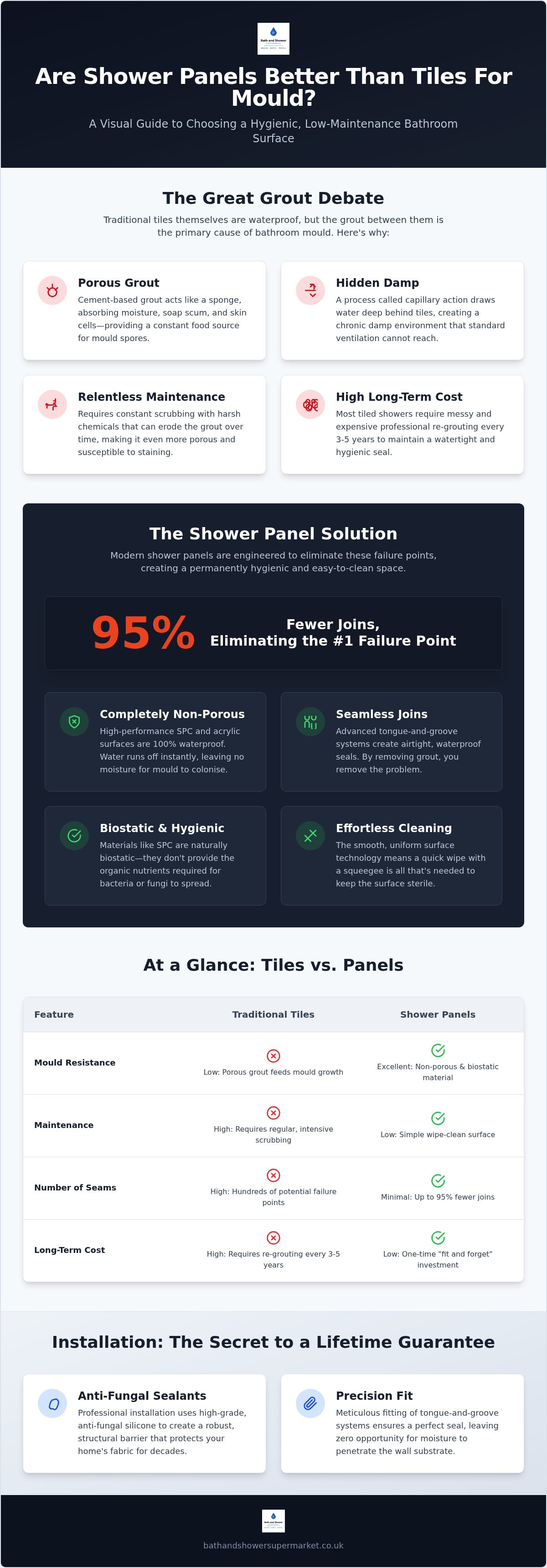
Traditional tiles are inherently waterproof, but the cement-based grout used to bridge the gaps between them is porous, textured, and absorbent. When assessing are shower panels better than tiles for mould, the technical vulnerability of grout is the most critical factor to consider. Grout acts like a rigid sponge, pulling in moisture, skin cells, and soap scum every time you shower. These organic materials provide a constant food source for fungal spores. Whilst the ceramic surface of a tile is easy to wipe, the recessed grout lines trap dampness that standard bathroom ventilation simply cannot reach.
The Anatomy of Grout Failure
The primary issue with tiled walls is capillary action. This process draws water deep behind the tile surface, saturating the adhesive and the wall substrate. Once moisture is locked in, it creates a chronic damp environment. Understanding what mildew is helps clarify why surface scrubbing rarely provides a permanent fix; whilst mildew sits on the surface, mould roots itself deep within the cement's micro-texture. This is why black spots often reappear just days after a deep clean. Grout porosity is the primary cause of bathroom mould.
Maintenance Fatigue and Long-Term Costs
Maintaining a tiled shower in a busy UK household is a relentless task. The reality involves a choice between constant scrubbing or accepting a gradual decline in hygiene. Over time, heavy-duty chemical cleaners actually worsen the problem. These acidic solutions erode the grout's structure, making it more porous and even more susceptible to infestation. This structural weakness often leads customers to wonder are shower panels better than tiles for mould when planning a long-term bathroom renovation.
The financial implications of tiling are often underestimated. Because grout is a point of failure, most tiled showers require professional re-grouting every three to five years to maintain a water-tight seal. This process is messy, expensive, and temporary. Our professional installation service offers a "done-for-you" alternative that replaces these high-maintenance joins with large-format, non-porous surfaces. By choosing a comprehensive supply and fit model, you invest in a solution that prioritises precision, durability, and long-term hygiene over repetitive repairs.
Shower Panels vs Tiles: A Hygiene and Mould Comparison
When comparing bathroom surfaces, the physical properties of the material determine how well it resists fungal growth. Homeowners often ask are shower panels better than tiles for mould when they realise that panels offer a completely non-porous surface that prevents water absorption. Whilst ceramic tiles are glazed, the glaze can develop microscopic fissures over time. In contrast, modern shower panels are engineered with high surface tension. This allows water to run off instantly, leaving no standing moisture for spores to colonise. By choosing large-format panels, you reduce the number of joins in your shower by up to 95% compared to standard tiling, effectively removing the environment where damp thrives.
Bacteria Resistance in Modern Materials
Modern materials like PVC and Stone Plastic Composite (SPC) are naturally biostatic. This means they don't provide the organic nutrients required for bacteria or fungi to spread. Unlike the uneven texture of grout, these surfaces are smooth and uniform. This 'wipe-clean' technology simplifies daily maintenance; a quick pass with a squeegee is usually enough to keep the surface sterile. Understanding the health implications of mold is vital for any homeowner, as persistent dampness can lead to respiratory issues and poor air quality. Our high-performance SPC wall tiles and panels provide a clinical level of hygiene that traditional ceramics cannot match.
Seamless Joins and Structural Integrity
The secret to a mould-free bathroom lies in the sealing system. Modern panels utilise advanced tongue-and-groove or click-lock technology to create airtight, waterproof seals. These systems are far more reliable than the manual application of grout between hundreds of individual tiles. Fewer seams mean fewer opportunities for moisture to penetrate the wall substrate. To ensure these systems perform as intended, professional bathroom installation ensures these joins are perfectly sealed with high-grade, anti-fungal silicone. This meticulous approach to setup creates a robust, structural barrier that protects your home's fabric for decades.
If you're planning a renovation, it's worth considering how these engineering benefits translate into long-term savings and peace of mind. You can view our Scudo shower panels to see how modern design meets technical excellence. By prioritising a 'done-for-you' service, you ensure that every join, trim, and seal is executed to a professional standard, making the question of are shower panels better than tiles for mould a matter of technical fact rather than opinion.
Choosing the Right Mould-Resistant Material for 2026
Selecting the right substrate is the first step in creating a permanent barrier against damp. When homeowners evaluate are shower panels better than tiles for mould, the technical composition of the material provides the most compelling evidence. PVC panels remain a staple for budget-conscious refurbs because they're lightweight, cost-effective, and 100% waterproof. For a more premium aesthetic, acrylic panels offer a high-gloss finish that mimics the depth of glass without the risk of shattering. Whilst laminate panels provide a classic look with an engineered core, they require meticulous edge sealing to remain effective over time. Each material offers a different balance of price and performance, but all share the common benefit of being easier to maintain than traditional ceramics.
Why SPC is Revolutionising UK Bathrooms
SPC (Stone Plastic Composite) is the definitive gold standard for 2026. It combines the density of stone with the flexibility of advanced polymers to create a surface that is virtually indestructible. The key to mold control is moisture control, and SPC excels here by offering total thermal stability. It doesn't warp, shrink, or expand when exposed to high temperatures. This ensures that the click-fit joins remain perfectly aligned and watertight for the life of the bathroom. Understanding how to fit SPC click flooring is a useful starting point, as the same precision engineering applies to our wall tiles to ensure an airtight, hygienic finish.
Aesthetic Options Without the Grout Hassle
Modern manufacturing has eliminated the need to choose between style and cleanliness. You can now achieve the look of high-end marble or natural stone without the maintenance burden of traditional ceramics. This is why many UK households now agree that are shower panels better than tiles for mould, especially when seeking a 'tiled-effect' that doesn't use real grout. Pairing these surfaces with Scudo bathroom furniture ensures a professional, high-end finish that stays pristine for years. For a truly contemporary feel, slatted wall panels offer a spa-like texture that remains entirely hygienic. These options provide a sophisticated aesthetic that lasts for decades without the risk of black spots or structural decay.
Installation: The Secret to a Lifetime Mould-Free Guarantee
The technical superiority of a material is only as effective as its implementation. Whilst the materials themselves are biostatic, the installation process determines whether your bathroom remains a sterile environment or becomes a trap for hidden moisture. Professional fitting ensures that every potential entry point for water is neutralised through a systematic approach. When clients ask are shower panels better than tiles for mould, the answer is often found in the precision of the four-step installation process:
- Step 1: Precise Wall Preparation. We ensure the substrate is flat, stable, and dry. Removing old, contaminated materials is vital to prevent trapped spores from affecting the new setup.
- Step 2: Professional Adhesion. We use industrial-grade, anti-fungal adhesives that create a full-surface bond. This eliminates the hollow pockets where condensation often forms behind traditional tiles.
- Step 3: Integrated Trim Installation. All exposed edges are protected by colour-matched aluminium or PVC trims. These act as a physical barrier against moisture ingress at the most vulnerable points.
- Step 4: Expert Plumbing Integration. Fitting panels around taps and shower heads requires meticulous sealing. We use high-performance silicones to ensure these high-use areas remain 100% watertight.
Why 'Supply and Fit' Beats DIY
The primary risk of a DIY installation is 'hidden mould'. If a panel isn't sealed correctly, water can seep behind the surface. Because the panels are waterproof, this dampness stays trapped against the wall, leading to structural rot that you won't see until it's too late. Professional installers use industrial-grade sealants and adhesives that aren't typically available in high-street DIY shops. This technical execution provides the peace of mind required for home insurance and long-term resale value. A professional guarantee is a statement of structural integrity that a self-fitted solution simply cannot match.
Coordinating Your Installation
A truly mould-free bathroom requires a holistic approach to moisture management. This often involves combining your wall panels with low profile shower tray benefits to ensure rapid drainage. Ensuring your wetroom screen bracing bar options are correctly anchored through the panels is essential for stability. By using a single point of contact for both supply and technical execution, you eliminate the risk of different components failing to work together. This coordinated effort ensures that your shower remains a hygienic, easy-to-clean space for decades.
If you're ready to upgrade to a maintenance-free bathroom, our team is here to help. You can book a professional installation consultation today to ensure your project is handled with technical precision from start to finish.
The Verdict: Are Shower Panels Better for Your Home?
After reviewing the technical data and seeing the results in homes throughout our community, the conclusion is clear. Shower panels are objectively superior for mould prevention due to their non-porous nature and lack of recessed joins. Tiles rely on a porous cement-based grout that eventually fails; modern panels solve this structural weakness. They provide a sterile, seamless, and durable surface that actively repels moisture rather than absorbing it. When local residents ask are shower panels better than tiles for mould, the answer lies in removing the 95% of failure points found in traditional tiling.
We recommend specific scenarios where our local clients see the greatest return on investment. Family bathrooms benefit from high-performance durability that withstands daily heavy use. Local rental properties gain a low-maintenance solution that protects the landlord's asset from damp-related structural damage. For those planning accessible conversions in our area, the ease of cleaning is a significant lifestyle benefit. Whilst the initial material cost of premium panels can be higher than budget tiles, the savings on local labour and the total elimination of re-grouting costs make them the more economical choice over a ten-year period. Our final recommendation is to choose SPC panels for the best balance of style, durability, and hygiene.
The Future of Local Bathroom Design
The trend across our region is shifting toward 'low-maintenance luxury'. Homeowners are moving away from ceramic tiles in favour of Stone Plastic Composite (SPC) and acrylic surfaces. This shift prioritises interior design that looks high-end but requires minimal physical effort to maintain. By choosing our local 'done-for-you' service, you ensure that the technical execution matches the quality of the materials. This approach is particularly relevant when considering long-term home safety. You can explore our accessible bathroom products UK guide for further ideas on creating a space that is safe, hygienic, and stylish.
Your Convenient, Nearby Solution
Transforming your bathroom into a mould-free environment starts with choosing a partner who understands our community's specific needs. Our collection features authorised Scudo and Kartell products, ensuring you receive precision-engineered materials that are built to last. We manage the entire process from initial supply to final technical execution. This single, nearby source eliminates the risk of 'hidden mould' caused by poor DIY sealing or uncoordinated tradespeople.
If you're ready to invest in a bathroom that stays pristine for decades, the next step is a professional assessment from a provider right on your doorstep. Our team understands the specific requirements of regional building standards. We provide a comprehensive solution that guarantees a waterproof, hygienic finish. You can request a professional installation quote today from Bath & Shower Supermarket to begin your journey toward a modern, maintenance-free shower space.
Secure Your Mould-Free Bathroom Future
Choosing the right surface is a long-term investment in your home's health and hygiene. By moving away from porous grout, you eliminate the primary environment where fungi take root. We've seen that the answer to are shower panels better than tiles for mould is found in the technical superiority of non-porous materials like SPC and acrylic. These surfaces are durable, hygienic, and modern. They provide a seamless barrier that protects your walls whilst simplifying your cleaning routine.
As an authorised UK retailer for Scudo and Kartell, we offer a comprehensive service that bridges the gap between high-quality supply and technical execution. Our expert national delivery ensures your materials arrive safely, whilst our full supply and fit service removes the risk of hidden moisture damage. You don't have to settle for the endless cycle of scrubbing and re-grouting. We provide the expertise, logistics, and precision required for a lifetime of hygiene.
Take the first step toward a maintenance-free shower space today. Book Your Professional Bathroom Installation Survey Today and let our specialists handle the precision work for you. You're closer than you think to a pristine, professional, and permanently clean bathroom.
Frequently Asked Questions
Can I install shower panels over existing tiles to save time?
Yes, you can install shower panels directly over existing tiles if the surface is flat, dry, and securely bonded to the wall. This "over-tiling" method significantly reduces installation time and avoids the mess of demolition. However, you must ensure the added thickness doesn't interfere with your shower tray or plumbing fittings. Our professional installation team assesses the substrate's integrity to ensure a lifetime bond.
Do shower panels look cheap compared to traditional ceramic tiles?
Modern premium panels are designed to mimic high-end materials like marble, quartz, and natural stone with remarkable accuracy. When considering are shower panels better than tiles for mould, customers often discover that Stone Plastic Composite (SPC) options provide a more sophisticated, seamless look than traditional ceramics. These products offer a sleek, meticulous finish that feels substantial and luxury rather than lightweight or temporary.
How long do shower panels actually last before they need replacing?
High-quality shower panels typically last between 15 and 20 years when installed correctly. Unlike tiles, which often require re-grouting every few years to maintain their integrity, panels are engineered for long-term durability. Their structural stability means they don't crack or warp over time. This longevity makes them a cost-effective alternative to traditional tiling for UK homeowners seeking a permanent, hygienic bathroom solution.
Are shower panels 100% waterproof if I install them myself?
Shower panels are only 100% waterproof if every join, trim, and plumbing penetration is perfectly sealed. Whilst the panels themselves are impervious to water, DIY installations often fail at the corners or around the shower valve. This is why we recommend a professional supply and fit service. Our installers use industrial-grade sealants to prevent moisture ingress and the risk of hidden structural rot.
What is the best way to clean shower panels without damaging the surface?
The best way to clean shower panels is with warm soapy water and a soft microfibre cloth or squeegee. You should avoid abrasive scouring pads or harsh bleach-based chemicals that can dull the surface finish over time. Because these materials are non-porous, soap scum and lime-scale don't bond to the surface as they do with grout, making daily maintenance fast and effortless.
Can I hang heavy shower shelves or grab rails on wall panels?
You can certainly hang heavy accessories like grab rails or shelving, but they must be anchored into the solid wall substrate behind the panel. It is a common mistake to fix items solely to the panel itself, which can lead to cracking or pulling. Our technical team ensures all fixtures are correctly drilled and sealed to maintain the waterproof integrity of the installation.
Will shower panels increase the value of my home compared to tiling?
Modern shower panels often increase home value by appealing to buyers looking for "low-maintenance luxury." Many people now ask are shower panels better than tiles for mould when viewing properties; a bathroom that is guaranteed to stay clean and spot-free is a major selling point. The professional finish of Scudo or Kartell products suggests a high standard of property maintenance and structural care.
Is there a specific type of sealant I must use to prevent mould?
You must use a high-modulus, anti-fungal silicone sealant specifically designed for sanitary use. Standard DIY sealants often lack the necessary fungicides to prevent surface growth in humid environments. We use professional-grade sealants that remain flexible and waterproof for decades. This ensures that the joins between your panels and shower tray remain airtight and completely resistant to fungal infestation.


