

Most homeowners assume all vinyl is created equal, yet choosing the wrong core material for your bathroom renovation often leads to buckled planks and visible subfloor imperfections within just eighteen months. We understand the frustration of stepping onto freezing tiles in January or scrubbing mould from stubborn grout lines. You want a floor that stays warm, remains waterproof, and stands stable despite the constant steam from a daily drench shower. This 2026 guide breaks down the essential technical differences in the SPC vs LVT flooring for bathrooms debate to ensure your next project is built for longevity.
You'll discover why the stone plastic composite (SPC) rigid core is the superior choice for dimensional stability and how it resists the "telegraphing" effect common in thinner, flexible LVT. We'll explore critical safety standards like the Pendulum Test Value (PTV) of 36+ for wet areas and the strict 27°C temperature limits for underfloor heating. By choosing an authorised UK supplier, you ensure your project benefits from high-volume expertise, logistical speed, and verified product standards. Whether you're pairing your floor with premium Scudo furniture or a minimalist wetroom screen, this comparison provides the professional, reliable, and meticulous detail needed for a high-traffic family bathroom.
Key Takeaways
- Identify why SPC’s limestone-based core offers superior dimensional stability, making it waterproof, warp-proof, and wear-proof in steamy British bathrooms.
- Evaluate the technical differences between SPC vs LVT flooring for bathrooms to choose a surface that resists telegraphing and handles high-traffic family life.
- Master the requirements for a professional finish, from essential subfloor preparation to maintaining the 27°C limit for underfloor heating compatibility.
- Streamline your renovation by coordinating structural SPC flooring with Scudo furniture and Kartell fixtures for a cohesive, designer-led aesthetic.
- Save time and labour costs with grout-free click-lock systems that are faster to install and easier to maintain than traditional ceramic tiles.
What is SPC Bathroom Flooring? The Rigid Core Advantage
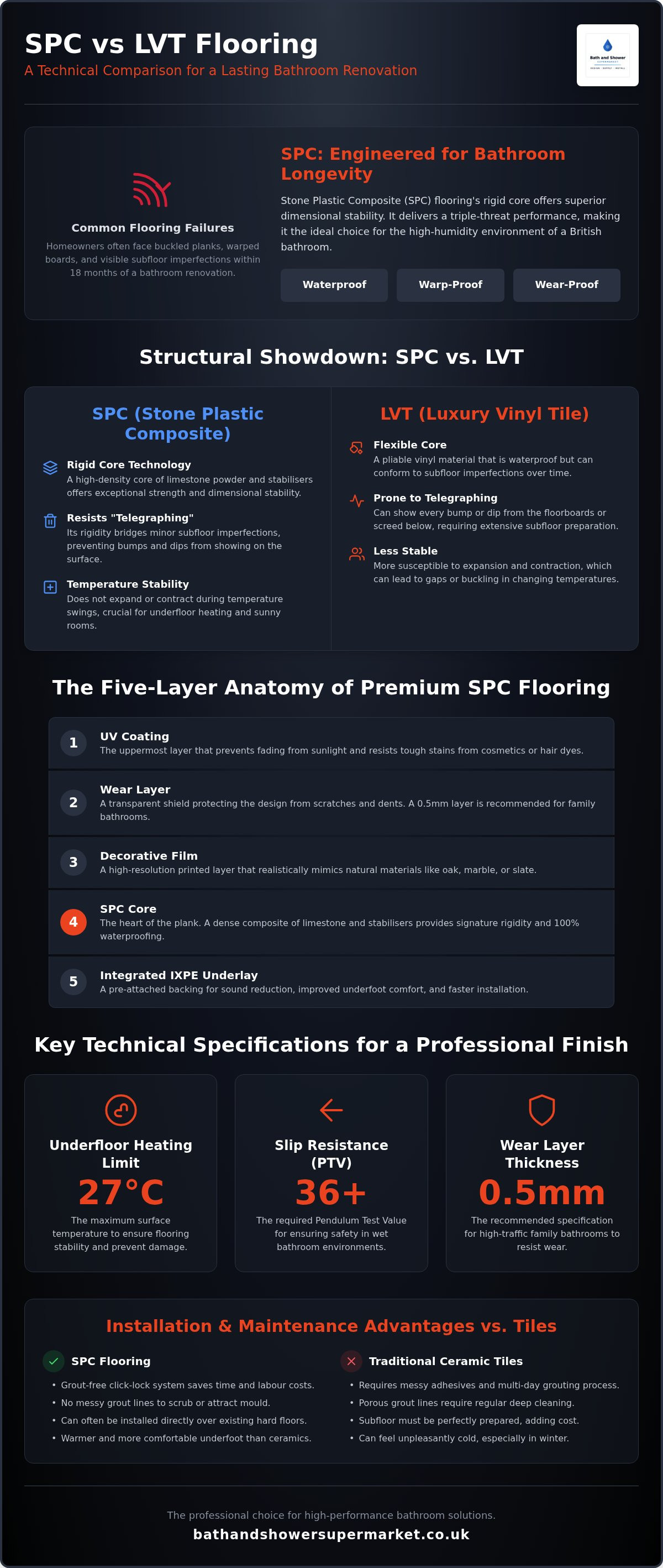
SPC flooring represents the next generation of bathroom surfacing. It stands for Stone Plastic Composite. This material features a high-density core engineered from a meticulous blend of natural limestone powder and stabilisers. It's a significant technical upgrade from traditional Vinyl composition tile and standard flexible LVT. The result is a plank that is stable, dense, and durable. For many UK homeowners, the SPC vs LVT flooring for bathrooms choice comes down to structural integrity. While standard LVT is waterproof, it remains a pliable product. SPC uses rigid core technology to create a floor that is virtually indestructible under normal domestic conditions. It delivers a triple-threat value proposition: it's waterproof, warp-proof, and wear-proof. This professional performance is vital in the high-humidity environment of a British family bathroom.
SPC vs. Traditional LVT: The Structural Difference
Traditional LVT is thin and pliable. Over time, it can "telegraph" imperfections from the subfloor below. This means every bump in your floorboards or dip in your concrete screed eventually shows on the surface. SPC remains rigid and unforgiving. Its limestone-based core bridges minor gaps and unevenness. You can often install it directly over existing ceramic tiles or timber floorboards without the extensive, costly preparation required for flexible vinyl. It doesn't expand or contract amongst temperature swings. This dimensional stability is essential for rooms with large windows or fluctuating underfloor heating. It's a reliable, efficient, and grounded solution for modern renovations.
Why SPC is Engineered for High-Moisture Zones
Bathrooms are brutal on flooring materials. Constant steam, splashes, and spills destroy laminate or engineered wood options. SPC is non-porous. Its limestone construction prevents the growth of common bathroom moulds and bacteria. The planks don't swell, even if accidentally submerged. This makes it the ideal partner for wetroom screens and drench showers. Most premium SPC ranges also feature sophisticated textured surfaces. These provide essential slip resistance in wet en-suite environments, typically aiming for a Pendulum Test Value (PTV) of 36 or higher. It's a professional-standard solution that provides long-term peace of mind. By sourcing from a specialist UK supplier, you ensure the product meets these rigorous safety standards whilst providing a stylish, high-end finish that complements premium Scudo furniture.
The Five-Layer Anatomy of Premium SPC Flooring
The performance of a bathroom floor is determined by its internal architecture. When evaluating SPC vs LVT flooring for bathrooms, the primary distinction lies in the multi-layered construction that provides structural integrity. Industry standards set by organisations like the Resilient Floor Covering Institute emphasise that the quality of these layers dictates a floor's lifespan. Every component must work in unison to withstand the unique pressures of a humid environment.
At the top, a UV Coating prevents fading from sunlight through bathroom windows; it also resists stubborn stains from cosmetics or hair dyes. Beneath this sits the Wear Layer, a transparent shield protecting the design from scratches, dents, and heavy footfall. The Decorative Film follows, using high-resolution prints to mimic natural oak, marble, or slate textures with photographic precision. The SPC Core, the limestone heart of the plank, provides the signature rigidity and strength discussed in previous sections. Finally, an IXPE Underlay is integrated into the base for sound reduction and underfoot comfort. This complex stack ensures a floor that is resilient, stable, and high-performing.
Choosing the Right Wear Layer Thickness
Selecting the correct specification is essential for long-term durability. A 0.3mm wear layer is typically sufficient for low-traffic en-suites. However, heavy-use family bathrooms require a 0.5mm layer to withstand the constant friction of daily life. This thickness directly affects how long the floor maintains its aesthetic finish before showing signs of dullness. The wear layer serves as the primary defence against chemical spills from cleaning products or toiletries.
The Role of the Integrated IXPE Underlay
Modern SPC includes a pre-attached IXPE backing that replaces traditional, separate underlay rolls. This feature reduces the sharp "clicking" sound often associated with thinner laminate or older LVT products. It also provides significant thermal insulation. This makes the surface feel considerably warmer underfoot than stone or ceramic tiles. If you are planning a comprehensive renovation, you can browse our full collection of SPC bathroom flooring to find designs with integrated acoustics. This built-in layer simplifies the installation process; it ensures a professional, level finish without the logistical hassle of managing multiple components on site. It is a quiet, warm, and comfortable solution for any British home.
SPC vs. LVT vs. Ceramic Tiles: A Performance Comparison
Choosing between SPC vs LVT flooring for bathrooms often involves a third contender: traditional ceramic tiles. Whilst tiles have been the industry standard for decades, SPC offers an efficient, modern, and reliable alternative. According to professional standards promoted by the Contract Flooring Association (CFA), the UK market is increasingly pivoting toward rigid core materials that combine moisture resistance with faster turnaround times. SPC click-lock systems are up to 70% faster to fit than tiles. You eliminate the mess of adhesive, spacers, and grout, allowing for a clean "dry" installation that often concludes in a single afternoon.
Comfort and weight are also deciding factors for the discerning homeowner. SPC naturally retains ambient room temperature. This ensures the floor feels warm underfoot even without active heating, unlike ceramic surfaces which remain cold throughout the British winter. Additionally, SPC is significantly lighter than stone or porcelain. It is the ideal choice for first-floor bathroom renovations where structural load on timber joists is a primary concern. It delivers a professional, high-end finish without the logistical strain of heavy masonry.
The End of Grout: Why SPC is More Hygienic
Grout is inherently porous. It attracts bacteria, absorbs stagnant water, and eventually discolours amongst the steam of a busy family bathroom. SPC creates a seamless, easy-clean surface that eliminates these common hygiene risks. Maintenance is straightforward; a simple damp mop replaces the need for specialised tile cleaners or aggressive scrubbing. Your floor maintains its original appearance for years without the unsightly yellowing or mould growth typical of older tiled en-suites. It is a meticulous, durable, and low-maintenance solution.
Weight and Structural Considerations for UK Homes
Older British properties often feature floor joists that were not engineered for the weight of thick stone slabs. SPC provides a reduced load whilst maintaining a solid, premium feel underfoot. Its rigid nature makes it the perfect partner for the wetroom screens UK renovators use to create flush-floor, spa-like aesthetics. By choosing a material that bridges minor subfloor imperfections, you ensure a level and structurally sound finish. It is a dependable, logistical, and expert choice for any domestic project.
Installation and Compatibility: Underfloor Heating and Subfloors
A high-end bathroom renovation relies on technical precision. When comparing SPC vs LVT flooring for bathrooms, the ease of installation is a major factor for both speed and structural success. Professional results begin with meticulous subfloor preparation. Your surface must be level, dry, and structurally sound. Whilst SPC’s rigid core is designed to bridge minor subfloor irregularities that would ruin flexible vinyl, a flat base is essential for the long-term health of the click-lock joints. Before work starts, you must allow the planks to settle in the bathroom for at least 48 hours. This acclimatisation period ensures the material adjusts to the local humidity and temperature of your home.
The click-lock process follows a floating floor method. It's fast, mess-free, and precise. Planks simply snap together without the need for messy specialist adhesives. However, you must maintain a 5-8mm expansion gap around the entire perimeter. This gap allows the floor to naturally shift as temperatures fluctuate in a steamy environment. Without it, even the most durable waterproof flooring can buckle over time. It's a small but vital detail that separates a standard DIY attempt from a professional-standard finish.
Technical Guide: SPC and UK Underfloor Heating
SPC is an excellent conductor of heat. It is fully compatible with both electric and water-based underfloor heating systems common in UK homes. Because of its limestone-based core, it transfers warmth more efficiently than traditional wood or standard flexible vinyl. This thermal efficiency is a key reason many renovators choose SPC over other options when weighing up SPC vs LVT flooring for bathrooms. To protect the structural integrity of the planks, you must ensure the system doesn't exceed a maximum surface temperature of 27°C. Using a floor sensor probe is the most reliable way to maintain this limit and protect your warranty. It's a warm, efficient, and stable solution for cold British mornings.
Finishing Touches: Trims, Thresholds, and Sealants
The final details define the quality of the project. Once the floor is laid, use colour-matched scotia or skirting to hide the essential expansion gaps. In wet areas, it's critical to silicone seal the perimeter. This prevents water from seeping beneath the planks and damaging the subfloor. Finally, select a high-quality threshold bar to create a seamless transition between the bathroom and the hallway. You can explore our range of SPC bathroom flooring to find the perfect match for your skirting and furniture. This meticulous approach ensures a durable, waterproof, and professional finish that lasts.
Designing Your Space: Coordinating SPC with Scudo Furniture
Technical specifications ensure longevity, but the aesthetic finish defines the atmosphere of your home. When resolving the SPC vs LVT flooring for bathrooms debate, the design versatility of stone plastic composite provides a distinct advantage for modern UK interiors. Its dense core allows for deeper embossing, resulting in textures that realistically mimic natural materials. Pairing warm, wood-effect SPC with Scudo bathroom furniture online creates a grounded, spa-like environment. This combination offers the organic beauty of timber without the risk of water damage or warping common in humid en-suites.
For those preferring a contemporary, industrial look, stone-effect SPC provides a professional foundation. These designs complement modern matt black Kartell fixtures and minimalist wetroom screens. You can achieve a sophisticated monochrome palette by combining white marble SPC flooring with slate-grey vanity units and towel radiators. Beyond colour, consider the layout of the planks. In small UK en-suites, running the flooring lengthways away from the door draws the eye toward the far wall. This simple directional choice makes compact spaces appear larger, more open, and meticulously planned.
Trend Watch: The Rise of Herringbone SPC
The herringbone pattern remains a favourite for homeowners seeking a traditional-meets-modern aesthetic. Whilst more complex to install than standard planks, the "click" logic of pattern-based SPC ensures a secure, waterproof fit. This layout creates a luxury focal point, particularly when paired with a freestanding bath or a high-end Scudo vanity unit. It delivers a meticulous, high-end finish that adds significant visual value to a master suite. It is a stylish, durable, and sophisticated choice for any renovation.
Coordinating with SPC Shower Panels
Achieving a fully waterproof envelope is possible by pairing your flooring with SPC shower panels. This approach ensures design continuity from the floor to the walls, creating a seamless, grout-free environment. Bath & Shower Supermarket is the preferred UK source for these coordinated solutions, providing a single, reliable point of supply for your entire project. By matching your textures and finishes across all surfaces, you create a bathroom that is easy to clean, structurally stable, and professionally finished. This end-to-end service model simplifies logistics and guarantees a cohesive, high-quality result for your local community project.
Upgrade Your Bathroom with Rigid Core Precision
Choosing the right surface is the foundation of any successful renovation. The technical superiority of the stone plastic composite core ensures your floor remains stable, waterproof, and warm despite the demands of a busy British home. By evaluating the structural differences in the SPC vs LVT flooring for bathrooms debate, you can avoid the common pitfalls of subfloor telegraphing and thermal expansion. You now have the technical knowledge to pair these durable surfaces with premium Scudo furniture for a truly professional finish.
At Bath & Shower Supermarket, we act as your dependable partner in home improvement. We are an authorised UK retailer for Scudo and Kartell, offering expert technical support to ensure your installation meets the highest standards. With fast UK-wide delivery from our dedicated UK warehouse, your project can move from planning to completion without delay. Browse the full SPC Bathroom Flooring collection at Bath & Shower Supermarket today to secure a floor that combines industrial-strength durability with sophisticated design. We look forward to helping you create a bathroom that stands the test of time.
Frequently Asked Questions
Is SPC flooring 100% waterproof for bathrooms?
Yes, SPC flooring is 100% waterproof and specifically engineered for high-moisture environments. The limestone-based core does not absorb water, ensuring the planks won't swell, warp, or delaminate even when subjected to frequent bathroom spills. This makes it a superior technical option when comparing SPC vs LVT flooring for bathrooms.
Can I install SPC flooring over my existing bathroom tiles?
You can install SPC flooring over existing ceramic or porcelain tiles provided the surface is level, secure, and structurally sound. Because of its rigid core technology, SPC bridges minor grout lines and subfloor imperfections that would cause standard flexible LVT to fail. This capability saves significant time and labour costs during a British bathroom renovation.
How do I clean and maintain my SPC bathroom floor?
Maintenance is straightforward and involves regular sweeping followed by a damp mop with a pH-neutral floor cleaner. You should avoid using steam mops or abrasive chemicals that could damage the protective UV coating. This simple routine keeps the surface hygienic and prevents the build-up of soap scum amongst the textured finish.
Is SPC flooring compatible with electric underfloor heating?
Yes, SPC is fully compatible with electric underfloor heating systems common in UK homes. It is an efficient heat conductor that warms up quickly whilst maintaining its structural integrity. It's essential to ensure the heating system is fitted with a floor sensor to prevent the surface temperature from exceeding the standard 27°C limit.
Does SPC flooring feel cold underfoot like ceramic tiles?
SPC flooring doesn't feel cold underfoot because it naturally retains the ambient temperature of the room. Unlike ceramic or stone tiles which draw heat away from your feet, the composite material provides a comfortable and warm surface. This is a primary benefit for family bathrooms during the winter months, even without active underfloor heating.
How long does SPC flooring typically last in a high-traffic bathroom?
A premium SPC floor typically lasts between 15 and 25 years in a high-traffic family bathroom environment. The exact longevity depends on the thickness of the wear layer, with 0.5mm specifications offering the highest resistance to daily scratches and dents. Choosing a professional-grade product ensures your investment remains durable and stylish for decades.
Do I need a separate underlay for SPC click flooring?
Most modern SPC click flooring comes with an integrated IXPE acoustic underlay pre-attached to the base of each plank. This means you don't need to purchase or install separate underlay rolls. This built-in layer provides sound reduction, thermal insulation, and underfoot comfort whilst simplifying the logistical setup of your flooring project.
Can SPC flooring be used in a wetroom or walk-in shower area?
SPC can be used in walk-in shower areas if the installation is meticulously sealed at the perimeter with high-quality silicone to protect the subfloor. However, you must verify that the specific product has a Pendulum Test Value (PTV) of 36 or higher to ensure safety in wet conditions. It pairs perfectly with wetroom screens for a seamless, modern aesthetic.


