

The most common mistake in a bathroom renovation is assuming any large tray will suffice as a direct bath replacement. You likely want to swap a dated tub for a modern walk in shower, but finding a suitable bath replacement shower tray that matches your existing 1700mm footprint can feel like a technical minefield. It's a valid concern, as a tray that flexes or drains poorly can lead to costly structural damage and persistent leaks.
We provide the technical clarity required to ensure your project is efficient, durable, and reliable. This guide will help you select the perfect tray by focusing on material density, precise dimensions, and the necessity of high-flow drainage systems. You'll discover why Scudo stone resin is the professional choice for rigidity and how to navigate the logistical process for fast UK delivery. We will cover everything from floor level access to the engineering benefits of solid-core construction, giving you total confidence in your home improvement investment.
Key Takeaways
- Learn why the 1700mm length is the industry standard for a seamless transition, allowing you to utilise your existing layout without major structural changes.
- Compare the structural benefits of Scudo stone resin against standard acrylic to ensure your new base remains rigid, durable, and leak-free for years.
- Understand the technical requirements for a walk in shower, bath replacement, shower tray installation, including how to choose between low-profile and riser kit options.
- Discover the importance of 90mm high-flow drainage and integrated wetroom screens in managing water runoff and preventing bathroom dampness.
- Streamline your renovation by sourcing precision-engineered fixtures from Scudo and Kartell with fast, reliable delivery from a specialist UK warehouse.
The Bath-to-Shower Transition: Defining the 1700mm Walk-In Standard
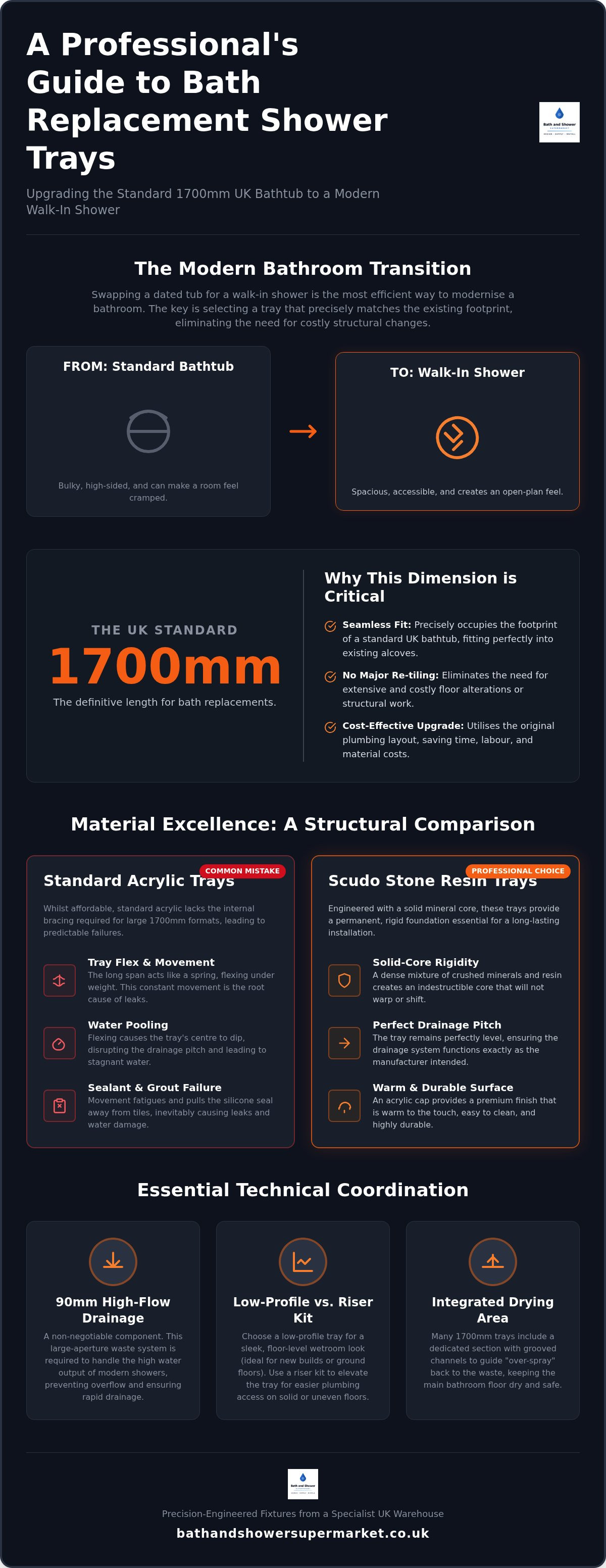
A walk-in shower tray is a large-format base engineered specifically to occupy the footprint of a standard UK bathtub. This design provides a direct solution for homeowners looking to modernise their space without the upheaval of a full room reconfiguration. By choosing a tray that mirrors the existing dimensions of your tub, you create a dedicated showering area that is accessible, spacious, and structurally sound. It is the most efficient way to upgrade a bathroom whilst maintaining the original plumbing layout.
The 1700mm length is the definitive standard for most British bathrooms. Selecting a walk in shower, bath replacement, shower tray in this specific size ensures the new installation sits exactly where the old bath once was. This approach offers a clear, no-nonsense benefit: it eliminates the need for extensive floor re-tiling or complex structural alterations. It is a practical, logical, and cost-effective method for transforming a tired bathroom into a contemporary wetroom environment without the traditional mess of a full renovation.
Many modern large-format trays now include integrated drying areas. These sections feature precision-engineered grooved drainage channels that guide water back toward the waste. This technical feature is essential for managing "over-spray" and ensuring the bathroom floor remains dry. It adds a layer of safety and functionality that standard trays often lack, providing a seamless transition from the wet area to the rest of the room.
Standard Dimensions for UK Bath Replacement
Most UK alcoves are built around 1700x700mm or 1700x800mm footprints. Whilst 700mm is the traditional width, upgrading to an 800mm tray offers a significantly more comfortable showering experience. It provides more elbow room and better water containment. Precision measurement is vital; you must ensure a tight fit between all three walls to guarantee a leak-free finish. A well-fitted tray acts as a rigid, stable, and permanent foundation for your new enclosure.
The Aesthetic Shift: Creating an Open-Plan Feel
Removing a traditional "boxed-in" bath instantly changes the room's dynamics. High rims are replaced with low-profile designs that sit close to the floor, removing visual clutter and physical barriers. This shift creates an open-plan feel that makes even smaller UK bathrooms appear larger. Modern trays, particularly those from Scudo or Kartell, focus on sleek lines and minimalist finishes. This transition moves the room away from a cramped utility space toward a clean, professional, and architectural aesthetic.
Material Excellence: Evaluating Scudo Stone Resin and Slate Effect Trays
Material selection determines the longevity of your renovation. Standard acrylic trays, whilst affordable, are often unsuitable for the 1700mm format because they lack internal bracing. A walk in shower, bath replacement, shower tray must remain perfectly level to ensure the drainage system functions correctly. Any dipping in the centre of the tray will cause water to pool, leading to stagnant smells and surface staining. By opting for a stone resin core, you ensure the drainage pitch remains exactly as the manufacturer intended. This technical precision is what separates a DIY-grade tray from a professional fixture.
Large-format trays require a foundation that is rigid, robust, and reliable. The physics of a 1700mm tray are different from a standard square base. The length creates a natural leverage point in the centre. Without a solid mineral core, the tray acts like a spring. Every time you step into the shower, the material moves. Over months of use, this movement fatigues the grout and sealant, eventually causing the silicone to pull away from the tiles. Scudo’s engineering addresses this by ensuring the base remains stable, dense, and permanent, regardless of the subfloor type.
Scudo Stone Resin: The Professional Choice
Scudo stone resin trays are the industry standard for those prioritising structural integrity. These trays are manufactured from a dense mixture of crushed minerals and high-grade resin, creating a solid-core foundation that is virtually indestructible. To provide a premium finish, they are acrylic-capped. This capping ensures the surface is warm to the touch and easy to clean, combining the strength of stone with the comfort of traditional bathroom fixtures. When you handle a Scudo tray, the weight is immediately apparent. A heavy tray is a direct indicator of high mineral content, signifying a product that will not warp or shift over time.
Slate Effect and Textured Finishes
Slate effect trays have become a staple in modern UK bathroom design, offering a sophisticated industrial look. Unlike standard high-gloss finishes, these trays feature a textured surface that provides natural slip resistance. This makes them an excellent choice for accessible showering areas where safety is a primary concern. Maintenance is straightforward; a soft brush and mild detergent will keep the textured surface free from limescale without damaging the finish. You can explore the full range of Scudo stone resin shower trays to find a finish that matches your aesthetic requirements. This meticulous attention to build quality ensures your new shower remains a high-performance feature of your home for years.
Structural Considerations: Low-Profile Trays versus Riser Kit Installations
Choosing between a low-profile finish and a raised installation is the most critical technical decision in your project. A walk in shower, bath replacement, shower tray can be installed either way, but your subfloor dictates the method. The primary concern for most UK homeowners is whether a sleek, floor-level look is achievable on a standard wooden floor. The answer depends entirely on your waste pipe access. You must decide whether to recess the plumbing into the floorboards or lift the tray to create the necessary space for drainage.
The decision process is direct, functional, and durable. If you have a solid concrete floor, you'll likely need to raise the tray unless you're prepared for significant excavation. On timber floors, you have more flexibility, but you must account for the joist direction. A tray that flexes because it isn't properly supported will eventually fail, so your choice of installation method must prioritises structural stability over pure aesthetics. This logistical logic ensures your bathroom remains leak-free for the long term.
Low-Profile Trays: Achieving the Minimalist Look
Low-profile trays sit just 25mm to 40mm above the floor, creating a look that is clean, modern, and unobstructed. To achieve this, your installer must recess the 90mm high-flow waste and the associated pipework beneath the floorboards. This is the ideal configuration for ground-floor renovations or new builds where plumbing can be planned in advance. The result is a "step-free" entry point that significantly improves accessibility, making it a future-proof choice for users of all ages.
Riser Kits: The Practical Solution for Timber Floors
If your waste pipe cannot be recessed due to obstructing joists or a solid floor, a riser kit is the professional solution. These kits consist of adjustable legs and a matching plinth that lifts the tray by approximately 100mm. This elevation provides ample room to install the waste trap and ensure the correct "fall" for efficient drainage. It's a pragmatic approach that avoids the cost and mess of structural floor alterations. To maintain a cohesive aesthetic, you can use Scudo bathroom furniture to complement the raised profile, ensuring the plinth blends seamlessly with your vanity units and storage. This ensures the installation looks intentional rather than like a compromise.
Technical Coordination: Integrating Wetroom Screens and High-Flow Drainage
Successful installation requires more than just placing a base in an alcove. You must coordinate the technical specifications of your wetroom screens with the drainage capacity of your tray. A walk in shower, bath replacement, shower tray project often fails when the waste cannot cope with the volume of water produced by modern drench heads. This leads to pooling and potential leaks over the tray rim. To prevent this, every large-format installation should feature a 90mm high-flow waste as standard. These units are designed to evacuate up to 30 litres of water per minute, ensuring the system remains seamless, efficient, and water-tight.
The grooved drying area on a 1700mm tray is a functional necessity. These precision-cut channels work in tandem with your screen to capture "overspray" before it reaches the bathroom floor. By directing this runoff back toward the central waste, the tray maintains a dry perimeter. This technical coordination is the difference between a high-performance wetroom and a bathroom that suffers from persistent dampness. You can view our full range of walk-in shower components to ensure every element of your drainage system is synchronised for maximum performance.
Selecting the Right Glass Enclosure
Integrating a large-format tray with the correct glass is a matter of structural balance. You should select 8mm toughened glass for a standard installation, or 10mm if you prefer a more substantial, architectural feel. For panels exceeding 1000mm in width, a bracing bar is essential to ensure the glass remains rigid, stable, and secure. You can find detailed advice on panel configurations in our guide to wetroom screens UK, which covers the logistical requirements for safe delivery. To achieve a professional finish, ensure you are coordinating finishes by matching your screen profile to your Kartell drench showers hardware, such as matt black or brushed brass.
Optimising Drainage Performance
Positioning the waste is vital for long-term reliability. Most 1700mm trays offer either an end-waste or a side-waste configuration. An end-waste is typically easier to align with existing bath plumbing, reducing the need for floorboard alterations. Always specify a self-cleaning waste trap; these units use a vortex design to clear hair and debris, preventing the blockages that often plague large, low-profile systems. This proactive approach to maintenance is essential for high-pressure systems where a standard waste is simply insufficient. Choosing the right position and type of waste ensures your shower remains strong, durable, and safe for daily use.
Efficient Procurement: Why Scudo and Kartell Define Modern UK Bathrooms
Procuring the right components for a bathroom renovation requires a balance of technical specification and logistical reliability. Scudo and Kartell have established themselves as the industry benchmarks for UK bathroom fixtures by prioritising engineering over aesthetics alone. When you invest in a walk in shower, bath replacement, shower tray, you aren't just buying a product; you are buying the peace of mind that comes from precision-manufactured goods. Purchasing from an authorised UK retailer ensures you receive genuine stock backed by full manufacturer warranties, protecting your investment for years to come.
A coordinated approach is the most efficient way to manage a renovation. By selecting verified collections from a single source, you ensure that the waste, the tray, and the enclosure profiles all match perfectly. This eliminates the frustration of mismatched finishes or incompatible technical fittings. Our "no-nonsense" procurement model focuses on clarity and consumer confidence, providing a straightforward path from selection to installation. The process is durable, precise, and verified.
The Scudo Advantage: Engineering and Design
Scudo products represent British design tailored specifically for the unique constraints of UK plumbing systems and space constraints. Their stone resin trays are engineered for longevity, making them the superior choice for high-traffic family bathrooms where durability is non-negotiable. To achieve a unified look, many homeowners coordinate their new base with Scudo shower enclosures. This ensures that the glass thickness and frame aesthetics are designed to work in tandem with the tray's load-bearing capacity and drainage pitch, creating a stable and permanent showering area.
Fast National Delivery and Logistical Speed
Our Northumberland warehouse in Morpeth acts as a central hub for national distribution, ensuring rapid dispatch across the UK. We understand that project timelines are often tight, which is why we prioritise logistical speed and stock availability. Heavy stone resin trays require meticulous handling. We utilise secure, industrial-grade packaging to ensure your items arrive in perfect condition. With direct access to over 3,000 products, we provide a complete project fulfilment service that keeps your renovation on track. This commitment to efficiency is what makes us a trusted partner for both professional installers and homeowners. Every delivery is rapid, secure, and reliable.
Modernise Your Bathroom with Technical Precision
Replacing a standard UK bath with a modern showering area is a strategic investment in both accessibility and home value. By prioritising a 1700mm footprint and high-density stone resin materials, you ensure your new installation is rigid, stable, and permanent. Technical coordination between your high-flow waste and wetroom screens will prevent the common pitfalls of poor drainage and surface leaks. This methodical approach ensures your renovation is built to last and functions exactly as intended from day one.
Choosing a verified supplier is the final step in a successful bathroom transition. As an authorised UK retailer for Scudo and Kartell, we maintain a vast inventory of over 3,000 products to ensure complete project fulfilment. Our Northumberland warehouse enables fast national UK delivery, helping you maintain your installation schedule without logistical delays. Investing in a precision-engineered walk in shower, bath replacement, shower tray provides the professional finish your home deserves. You can trust our expertise to deliver the reliability and structural integrity your project requires.
Browse the full range of Scudo Shower Trays at Bath & Shower Supermarket and begin your transformation today. We're ready to help you create a space that is as durable as it is stylish.
Frequently Asked Questions
How do I replace a bath with a shower tray?
You replace a bath by removing the existing tub, assessing the plumbing layout, and installing a tray that matches the original footprint. Ensure the subfloor is level and the waste pipe aligns with the new tray's outlet position. Using a 1700mm tray simplifies the process by occupying the same space, which significantly reduces the need for extensive floor repairs or plumbing relocation.
Can I put a walk-in shower tray on floor joists?
Yes, but you must first create a stable, level platform using marine-grade plywood or a dedicated riser kit. Never install a tray directly onto joists as this leads to flexing, movement, and eventual seal failure. A stone resin tray is essential for this type of installation because it provides a foundation that is rigid, robust, and reliable across the span of the joists.
What is the best material for a bath replacement shower tray?
Acrylic-capped stone resin is the professional choice for a walk in shower, bath replacement, shower tray project. This material combines a dense mineral core for structural integrity with a surface that is warm to the touch and easy to clean. Unlike standard acrylic, stone resin does not flex under weight, ensuring your silicone seals remain intact and leak-free for years.
Do I need a special waste for a walk-in shower tray?
Yes, a 90mm high-flow waste is a technical requirement for large-format walk-in systems. Standard wastes often struggle to evacuate the volume of water produced by modern drench heads, leading to pooling and overflows. High-flow units are designed to discharge up to 30 litres of water per minute, keeping the showering area efficient and preventing water from escaping over the low-profile rim.
What size shower tray replaces a standard UK bath?
A 1700mm length tray is the definitive standard for replacing a traditional British bathtub. Most UK baths are 1700mm long and either 700mm or 750mm wide. Choosing a tray that mirrors these dimensions ensures a precision fit within the existing alcove. This allows you to utilise the original wall tiling and plumbing points without the need for major structural alterations to the room.
Is a stone resin shower tray better than acrylic?
Stone resin is superior to standard acrylic due to its density and permanent structural stability. Acrylic trays are lightweight and prone to warping, which causes the tray to "bounce" and pull away from the wall tiles. Stone resin provides a solid-core foundation that remains perfectly level under heavy use. It is a denser, heavier, and more durable solution that defines high-quality UK bathroom engineering.
Can I use a low-profile shower tray in an upstairs bathroom?
Yes, provided you have sufficient space beneath the floorboards to recess the waste pipework and trap. If your floor joists obstruct the plumbing path, you should use a riser kit to lift the tray by approximately 100mm. This creates the necessary "fall" for the drainage whilst avoiding the cost and mess of structural floor alterations. Both methods provide a professional, water-tight finish.
How do I prevent water from splashing out of a walk-in shower?
You prevent splashing by pairing a large-format tray with a wetroom screen of at least 1000mm in width. For additional protection, consider a 300mm return flipper panel to capture overspray. Selecting a tray with integrated drying areas and grooved drainage channels is also vital. These features guide runoff back toward the central waste, ensuring the rest of your bathroom floor remains dry, safe, and accessible.


