
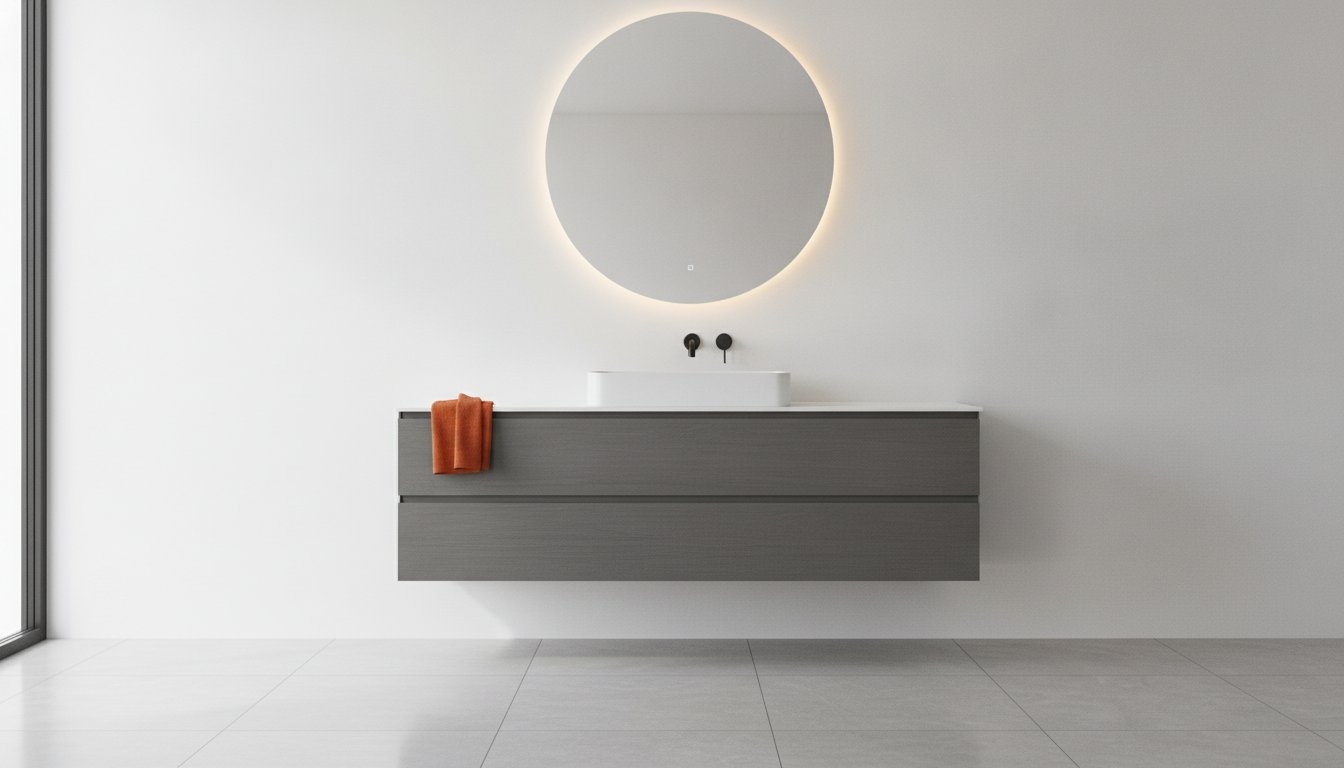
A bathroom floor you cannot see is a bathroom you cannot truly clean. Most homeowners feel the daily frustration of navigating a mop around heavy, floor-standing units that trap dust and grime in inaccessible corners. You likely want a space that feels open, airy, and effortless to maintain. Integrating a wall hung bathroom vanity is the most decisive way to reclaim that lost floor area whilst instantly elevating the room with a sleek, architectural profile.
This guide provides the technical clarity required to transform your space with total confidence. You will discover how to select the right materials for superior moisture resistance, verify your wall's structural integrity, and choose a finish that stands the test of time. We will examine the Scudo range for its precision, durability, and style, whilst showing you how to pair your unit with Kartell LED mirrors for a professional result. From understanding weight-bearing requirements to selecting the final aesthetic touches, you will gain the expert knowledge needed to create a streamlined, organised, and meticulously finished bathroom.
Key Takeaways
- Understand how a wall hung bathroom vanity delivers a triplet of benefits: modern style, increased floor space, and improved hygiene.
- Learn how to measure for optimal "breathing room" to ensure drawers and doors operate without obstruction in compact layouts.
- Gain confidence in your installation by identifying the specific requirements for mounting furniture to solid brick versus stud wall partitions.
- Create a professional, cohesive finish by matching your Scudo vanity with Kartell LED mirrors and high-quality towel radiators.
- Select durable, moisture-resistant finishes that protect your investment and maintain the structural integrity of your bathroom furniture.
What is a Wall Hung Bathroom Vanity and Why Choose One?
A wall hung bathroom vanity serves as a high-impact architectural feature. It is a floating storage unit mounted securely to the wall, completely independent of the floor. This design choice offers a rhythmic triplet of benefits: it is modern, spacious, and hygienic. By elevating the unit, you remove the visual weight associated with traditional cabinetry. This creates a clean, sharp, and decisive look that transforms the atmosphere of the room.
The primary advantage is the illusion of space. Removing the base creates a continuous line of flooring that extends to the wall. When the eye can track the entire floor area without interruption, the room feels significantly larger. This is a critical design strategy in compact UK bathrooms where every square centimetre matters. It turns a functional necessity into a tool for visual expansion.
Hygiene is another primary driver for this style. Floor-standing units often trap moisture and dust in the seal between the plinth and the tiles. A wall-hung unit eliminates these hidden traps entirely. Cleaning becomes effortless; a mop or vacuum can reach every corner without obstruction. This prevents the build-up of mould and grime that often plagues damp bathroom environments, ensuring your space remains fresh and sanitary.
The Aesthetic Advantage of Floating Furniture
Floating units are essential for minimalist, industrial, and contemporary UK bathroom designs. They provide an uncluttered look that prioritises clean lines and structural simplicity. This style is a direct evolution of the standard Bathroom cabinet, moving away from bulky silhouettes toward a more refined, professional aesthetic. These units are perfect for showcasing premium floor finishes, such as high-quality tiling or SPC wall tiles that extend across the floor. The result is a cohesive, architectural finish that feels intentional and high-end.
Practical Benefits for Small and Large Bathrooms
Space-saving utility is the hallmark of a wall hung bathroom vanity in compact cloakrooms and en-suites. In these tight quarters, a floating unit keeps the floor clear, making the space feel less cramped and more organised. Conversely, in master bathrooms, double wall-hung units provide a luxury, hotel-inspired feel without overwhelming the room. Beyond aesthetics, the design improves accessibility for floor-level maintenance. Plumbing connections are easier to inspect, and there is no wooden base to absorb water from accidental leaks. It is a robust, practical, and efficient solution for any modern home.
Selecting the Perfect Size, Finish, and Configuration
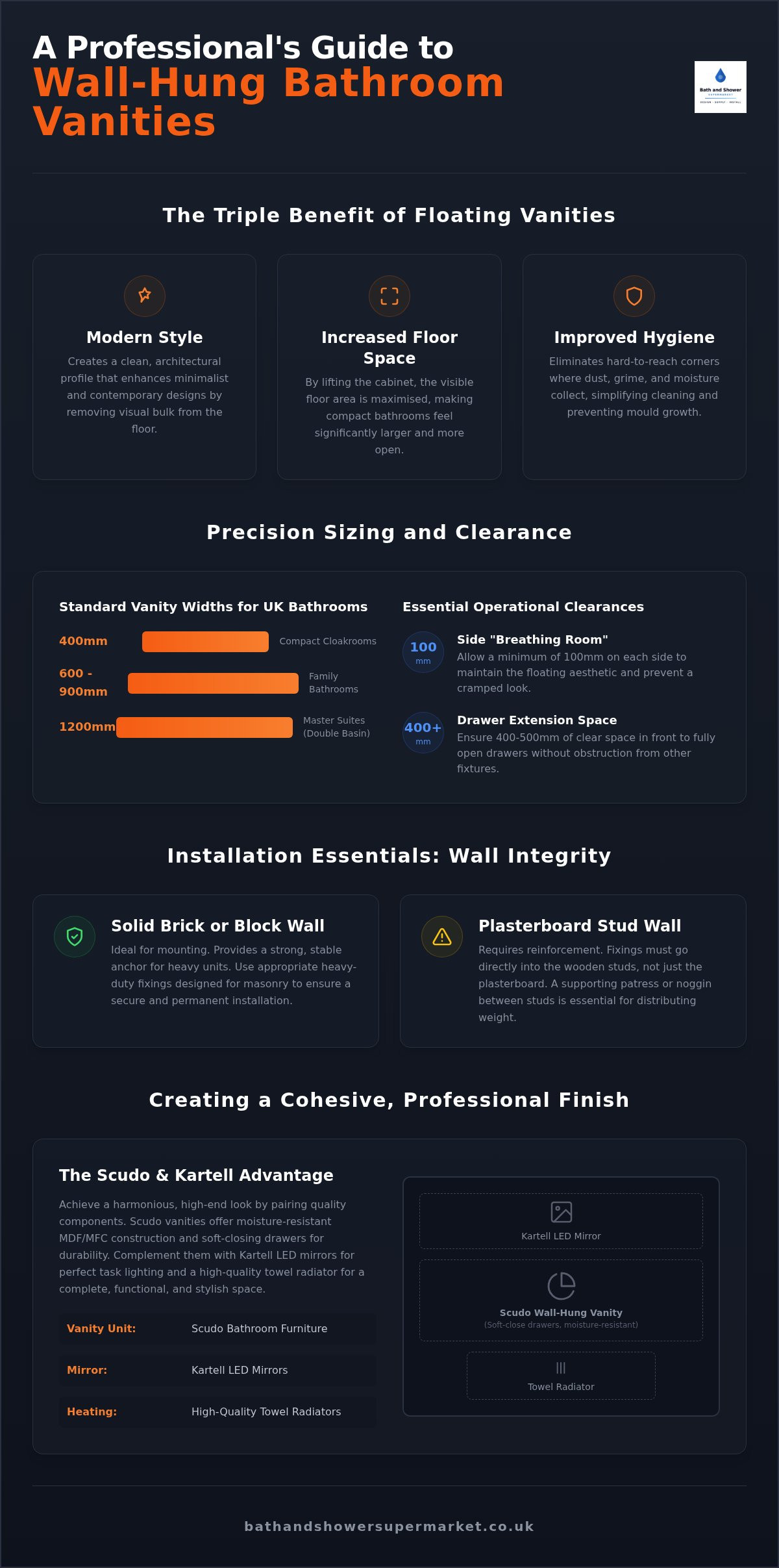
Precision measurement is the foundation of a successful installation. When selecting a wall hung bathroom vanity, you must consider the footprint of the unit and the "breathing room" surrounding it. A vanity that is too large for the space creates a cramped environment, whilst one that is too small looks disconnected. Standard UK widths provide a decisive range for every requirement. You will typically find 400mm units for compact cloakrooms, 600mm to 900mm for standard family bathrooms, and 1200mm double basins for master suites. Always allow for a minimum of 100mm clearance on either side to maintain the floating aesthetic.
Drawer clearance is a critical technical factor that many homeowners overlook. You must ensure that drawers can open to their full extension without striking a radiator, door frame, or toilet. Most vanity drawers require at least 400mm to 500mm of clear space in front of the unit for comfortable operation. To guarantee longevity in high-humidity environments, look for units constructed from high-grade MDF or MFC. The Scudo collections, for example, utilise materials that are durable, resilient, and moisture-resistant, ensuring the furniture does not swell or delaminate over time.
Choosing Between Single and Double Drawers
Your storage requirements should dictate the drawer configuration. Deep, single drawers are ideal for storing tall cleaning bottles and bulky towels. Conversely, double-drawer units provide better organisation for smaller daily toiletries. High-quality units feature soft-closing mechanisms as standard. This provides a premium, quiet, and controlled feel that protects the unit's structural integrity by preventing slamming. Internal organisers are also worth considering to keep your daily essentials tidy, organised, and efficient. You can explore the full range of Scudo Bathroom Furniture to find the specific storage layout that fits your routine.
Popular Finishes: From Gloss White to Matt Grey
The finish of your vanity defines the room's character and should align with current Modern Bathroom Elements to ensure long-term appeal. Gloss White remains a timeless choice; it reflects light, remains easy to clean, and makes small rooms feel brighter. For a more sophisticated, no-nonsense look, Matt Grey and Anthracite finishes are increasingly popular. These darker tones provide a sharp contrast against white sanitaryware. If your space feels too clinical, wood effects like Oak or Walnut add organic warmth and texture without compromising on the durability of modern synthetic finishes.
Installation Essentials: Structural Integrity and Wall Types
Structural integrity is the primary concern for most homeowners when choosing a wall hung bathroom vanity. It is a valid anxiety. Unlike floor-standing furniture that distributes weight through a base, a floating unit relies entirely on the wall's ability to resist both vertical and horizontal forces. You must account for the combined weight of the moisture-resistant cabinet, the heavy ceramic or stone basin, and the water it holds when full. A professional installer ensures the unit remains safe, secure, and permanent. Attempting a DIY fit on an unsuitable surface risks catastrophic failure and will likely void your product warranty.
The mounting process differs significantly depending on your bathroom's construction. Solid brick or breeze block walls offer the most reliable foundation; they allow for heavy-duty bolts to bite directly into the masonry. However, many modern UK homes utilise stud partitions. Mounting a large 800mm or 1200mm unit directly to unreinforced plasterboard is impossible. The wall requires a stable, rigid, and professional framework to prevent the unit from pulling away over time. This is why planning the installation before tiling is essential for a high-quality finish.
Reinforcing Stud Walls for Heavy Vanities
If you are installing onto a stud wall, you require "noggins" to provide a secure fixing point. These are horizontal timber supports fitted between the vertical metal or wooden studs at the exact height of the vanity brackets. Standard plasterboard fixings are insufficient for larger units because they cannot distribute the cantilevered load across the wall's internal structure. Load-bearing capacity represents the maximum structural force a wall and its fixings can reliably withstand without risk of collapse or mechanical deformation. Without these internal reinforcements, the weight of the basin alone can cause the wall to bow or the tiles to crack.
Determining the Correct Installation Height
The standard UK installation height typically ranges between 800mm and 850mm from the finished floor to the basin rim. This height provides an ergonomic, comfortable, and efficient posture for the average adult. You can, however, adjust these measurements to suit taller households or specific accessibility requirements. Precision is mandatory when setting this height; you must ensure the internal plumbing and waste pipes align perfectly with the drawer cut-outs inside your Scudo unit. Misalignment leads to restricted drawer movement or the need for unsightly modifications to the furniture's internal structure. Always measure twice to ensure the finished result is both functional and aesthetically balanced.
Coordinating Your Vanity with Modern Bathroom Elements
Achieving a high-end finish requires more than just mounting furniture. You must treat the wall hung bathroom vanity as a central component within a wider design framework. Successful bathrooms often follow a rhythmic triplet: matching the vanity, mirror, and radiator finishes to create a decisive sense of continuity. If you choose a matt black Scudo unit, pairing it with a black towel radiator and matching brassware prevents the space from feeling fragmented.
Positioning the vanity against a contrasting background makes it a clear focal point. Lighting plays a critical role here. Installing recessed LED strips beneath the unit or using a backlit mirror enhances the floating effect, casting a soft glow that emphasises the reclaimed floor space. This visual separation from the floor is what defines the modern floating aesthetic. It creates a sense of weightlessness that traditional cabinetry cannot replicate, an effect that can be further enhanced by selecting bespoke window dressings from Universal Blinds UK at universalblindsuk.co.uk.
Pairing with Slatted Wall Panels and SPC Tiles
Texture adds depth to minimalist designs. Integrating black slatted bathroom wall panels provides a sophisticated, tactile backdrop that anchors the furniture. These panels create vertical lines that lead the eye upward, making the ceiling feel higher. For the immediate "splash zone" behind the basin, SPC wall tiles offer a 100% waterproof and durable barrier. This combination creates a feature wall that is both structurally sound and visually striking. It ensures the most vulnerable areas of your bathroom are protected from moisture whilst maintaining a high-quality finish.
The Role of LED Mirrors and Taps
Hardware consistency is a hallmark of professional design. You should match your vanity handles with your basin taps for a unified chrome, black, or brass look. Positioning a black LED bathroom mirror, such as the Kartell Nero, directly above the vanity maximises light and adds a layer of modern utility. In high-moisture environments, demister mirrors are essential. They ensure the glass remains clear after a shower, maintaining both function and aesthetic clarity. These elements work together to provide a space that is efficient, bright, and meticulously organised.
The wall hung bathroom vanity acts as the foundation of this modern aesthetic. You can find everything needed for a complete installation, from Scudo furniture to coordinating radiators, at Bath & Shower Supermarket.
The Scudo and Kartell Advantage: Quality You Can Trust
Selecting a wall hung bathroom vanity is a decision that impacts the structural safety and longevity of your home. Unlike freestanding units, floating furniture requires precision engineering to ensure it remains securely anchored for years. Scudo and Kartell represent the pinnacle of this industry, offering a combination of structural integrity, precision engineering, and professional finishes. Choosing these verified brands provides the peace of mind that comes from meticulous manufacturing standards. It ensures your furniture can withstand the daily rigours of a busy household without compromising its sleek, architectural profile.
Buying from an authorised UK retailer is the only way to guarantee genuine warranties and specialist support. Bath & Shower Supermarket provides this direct link to the manufacturers, ensuring every product is authentic and fully backed by the brand. Logistical speed is a core part of our service. Fast national delivery from our distribution centre keeps your renovation on track, avoiding the delays often associated with third-party imports. Our team understands the technical requirements of these units and provides the expert guidance needed to ensure a successful, safe, and efficient installation.
Scudo Furniture: Built for the British Bathroom
Scudo products undergo rigorous testing to meet high moisture-resistance standards. This is essential in the humid conditions of a British bathroom where steam and water splashes are constant. The variety of styles is extensive, ranging from the minimalist K-Line to sophisticated traditional-modern hybrids that suit a wide array of interior themes. Every unit is designed with a focus on durability, ensuring the core materials do not swell or delaminate over time. Investing in a verified brand like Scudo offers far greater long-term value than choosing generic imports that often lack the structural reinforcement required for heavy stone or ceramic basins. To maintain this high standard of craftsmanship throughout your home, check out The Mensa Table Company for bespoke dining furniture that combines durability with signature style.
Why Bath & Shower Supermarket is Your Ideal Partner
Successful bathroom design relies on coordination across multiple categories. With access to over 3,000 products in stock, we provide the components needed to complete an entire renovation in one place. Our expertise extends beyond furniture; we specialise in coordinating your wall hung bathroom vanity with high-performance towel radiators, slatted wall panels, and SPC tiles. This holistic approach ensures that your fixtures, heating, and surfaces work together as a unified, professional, and high-quality system. You can explore our full range of wall hung bathroom vanities today to begin your project with confidence.
Transform Your Bathroom with Decisive Design
A successful renovation balances architectural style with technical precision. By choosing a wall hung bathroom vanity, you reclaim valuable floor space whilst creating a hygienic, modern, and uncluttered environment. You now understand the critical importance of structural integrity, the necessity of professional installation, and the benefit of matching your furniture with high-quality fixtures. These elements work together to provide a bathroom that is efficient, durable, and meticulously finished.
As an authorised UK retailer for Scudo and Kartell, we provide the stability and expertise your project requires. With over 3,000 high-quality products in stock, we act as a dependable partner for your home improvement journey. We ensure your items are handled with logistical mastery, offering fast and reliable delivery from our Morpeth warehouse. You can browse our curated collection of Scudo and Kartell wall hung vanities to find the perfect fit for your layout. Your path to a streamlined and organised bathroom starts with choosing furniture built for longevity, function, and style.
Frequently Asked Questions
Can any bathroom wall support a wall-hung vanity unit?
Not every wall is immediately suitable for a floating installation. Solid masonry walls provide the most secure foundation for a wall hung bathroom vanity. If you are installing onto a stud partition, you must fit timber noggins between the studs to provide a rigid mounting point. Mounting directly to standard plasterboard is unsafe and will result in structural failure.
How much weight can a wall-mounted vanity unit actually hold?
Weight capacity depends on the unit's build quality and the fixings used. Most professional-grade units are engineered to hold between 50kg and 100kg when mounted to a solid wall. This includes the weight of the cabinet, the basin, and a full volume of water. Always verify the specific load-bearing capacity of your chosen Scudo unit before proceeding with the installation.
What is the standard height for a wall-hung bathroom vanity in the UK?
The accepted benchmark in the UK is 800mm to 850mm from the finished floor to the top of the basin rim. This height ensures an ergonomic, comfortable, and efficient experience for most adults. You can adjust this slightly to suit your household's specific needs, but remember that plumbing waste exits are often pre-set to align with this standard level.
Do wall-hung vanity units come with the basin included?
This depends on the specific product configuration you choose. Many of our Scudo collections are supplied as complete sets with a matching ceramic or polymarble basin. However, some units are sold as base cabinets only to allow for the customisation of countertop basins. Always check the product description to confirm if the basin is a standard inclusion.
Are wall-mounted vanities harder to install than floor-standing ones?
Installation is more complex than floor-standing alternatives. You must manage structural wall reinforcement, precise bracket positioning, and concealed plumbing. While a floor-standing unit carries its own weight, a floating unit requires technical expertise to ensure it is level, secure, and permanent. We recommend professional installation to protect your warranty and ensure long-term safety.
How do I clean and maintain the finish on my floating vanity?
Maintenance requires a simple, non-abrasive approach. Use a soft, damp cloth with a mild detergent to wipe down the surfaces daily. Avoid harsh chemical cleaners, bleach, or scouring pads that can damage the moisture-resistant finish. Drying the unit after use prevents water spots and preserves the high-quality aesthetic of the furniture for years to come.
What happens to the plumbing with a wall-hung unit?
Plumbing is typically concealed within the cabinet or behind a false back panel. For a clean, professional look, the water supply and waste pipes should exit the wall rather than the floor. This ensures the space beneath the wall hung bathroom vanity remains completely clear, maintaining the minimalist floating effect that defines this modern style.
Is a wall-hung vanity suitable for a small cloakroom?
It is the superior choice for compact cloakrooms and en-suites. By lifting the unit off the floor, you create an illusion of space that makes small rooms feel less cramped. Compact 400mm or 500mm units provide essential storage without overwhelming the limited floor area, making the room significantly easier to clean and more organised.


