

The era of scrubbing mouldy grout lines with a toothbrush is officially over. Choosing waterproof wall cladding bathroom systems has become the definitive standard for homeowners who demand a high-end finish without the relentless maintenance. You likely agree that traditional tiles, whilst attractive initially, often lead to damp issues and stained grout that ruins the aesthetic of a premium space. It is a frustrating, expensive, and outdated cycle that modern engineering has finally solved.
This ultimate 2026 guide reveals why modern cladding is the superior, grout-free alternative for any British renovation. We promise to clarify the confusion surrounding material durability by exploring the technical advantages of SPC and PVC. These solutions are durable, seamless, and waterproof. Our preview covers everything from the "quiet luxury" trend to the logistical speed of installation. You will discover how to achieve a professional, spa-like result that prioritises longevity, hygiene, and structural integrity without the typical costs of a master tiler.
Key Takeaways
- Identify the technical differences between SPC, PVC, and acrylic to select the most durable, rigid, and high-performance material for your specific project requirements.
- Learn how to install a waterproof wall cladding bathroom system up to four times faster than traditional ceramic tiles using the efficient and mess-free over-boarding method.
- Eliminate the risk of black mould, persistent damp, and stained grout by switching to a seamless, hygienic, and low-maintenance surface solution.
- Discover how to coordinate 2026 design trends, such as textured slatted wall panels, with Kartell Nero fixtures for a sophisticated, professional, and cohesive finish.
Understanding Waterproof Wall Cladding for Bathrooms
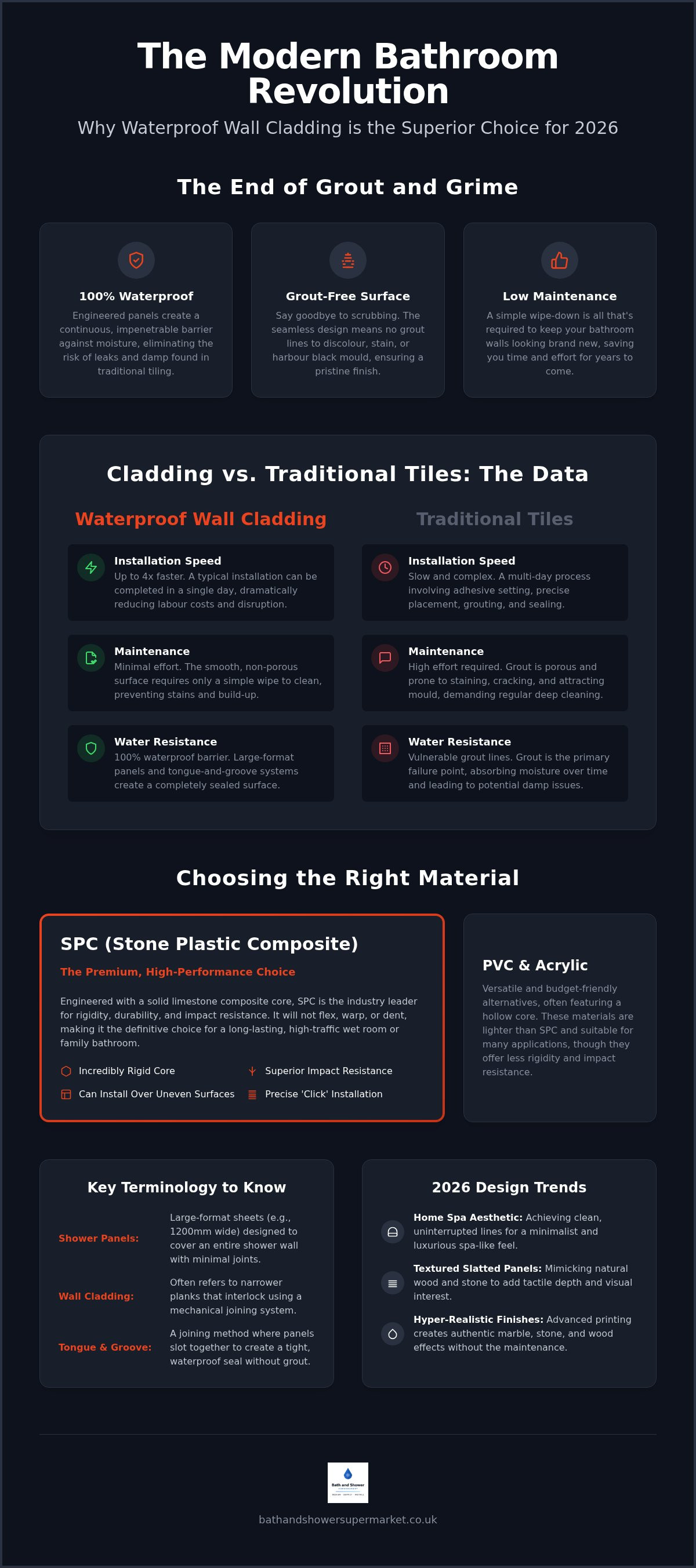
Waterproof wall cladding bathroom systems are engineered as large-format, high-density sheets designed specifically for moisture-heavy environments. Unlike ceramic tiles that rely on a grid of porous cement, these panels create a continuous, impenetrable barrier. This shift in British interior design prioritises performance over tradition. Homeowners are increasingly moving away from the maintenance-heavy reality of tiles toward seamless, hygienic surfaces that offer peace of mind. Modern cladding is durable, hygienic, and efficient.
The core proposition is simple: 100% water resistance without the vulnerability of grout. Traditional grout is porous, meaning it eventually absorbs water, discolours, and harbours mould. Cladding removes this failure point entirely. Whilst often associated with shower enclosures, these panels are incredibly versatile. They are now a standard choice for full-room renovations, compact en-suites, and even downstairs cloakrooms where a clean, modern aesthetic is required. The installation is fast, clean, and cost-effective.
To understand the broader context of What are wall panels?, it is helpful to see how they have evolved from simple decorative timber to advanced, waterproof composites. Modern cladding is built to withstand the rigours of daily steam, direct water spray, and high-traffic use. It represents a significant upgrade in both structural integrity and architectural finish.
Why Cladding is Trending in 2026
The rise of the "home spa" aesthetic has fundamentally changed how we design bathrooms. This style demands clean, uninterrupted lines that traditional tiling cannot easily achieve. Beyond aesthetics, cost-of-living factors have made efficiency a priority. Professional tiling is a slow, multi-day process involving substrate preparation, adhesive application, and grouting. Cladding is significantly faster to install, which reduces labour costs for the homeowner. Additionally, 2026 printing technology has reached a point where stone, marble, and wood effects are hyper-realistic. You get the premium look of natural materials with none of the sealing or maintenance requirements.
Key Terminology Every Homeowner Should Know
Before purchasing, it is vital to distinguish between different product types. Shower panels typically refer to large-format sheets, often 1200mm wide, designed to cover a shower wall with minimal joints. In contrast, wall cladding often refers to narrower planks that use a tongue and groove system. This is a mechanical joining method where the edge of one panel slots into the next, creating a tight, waterproof seal. You should also consider the finish: textured panels provide a tactile, matte feel that mimics natural stone, whilst smooth finishes are excellent for reflecting light in smaller, darker bathrooms.
Material Comparison: Choosing Between SPC, PVC, and Acrylic
Selecting the right material for your waterproof wall cladding bathroom installation depends on your balance of budget, durability, and aesthetic requirements. UK homeowners typically choose between three primary composites: SPC, PVC, and Acrylic. Each material serves a distinct purpose within the wet room environment. Understanding these technical differences ensures a long-lasting, professional result. The right choice provides peace of mind, structural integrity, and visual appeal.
SPC (Stone Plastic Composite) is the current industry leader for high-traffic areas. It's engineered with a limestone core. This makes it incredibly rigid. Unlike hollow-core alternatives, it doesn't flex or warp. This stability is one of the key advantages of waterproof wall panels when creating a permanent, leak-proof wet room. It's a heavy-duty solution for those who value longevity above all else.
The Benefits of SPC Wall Tiles
SPC wall tiles are defined by three traits: they are heavy, solid, and precise. The stone-composite core provides immense structural rigidity. This means the panels can be installed over slightly uneven surfaces without telegraphing imperfections. Its impact resistance is superior to standard PVC. It won't dent if hit by a handheld showerhead or a falling bottle. Many homeowners prefer the "click" installation system. It provides a satisfying, tile-like mechanical bond that remains watertight for years. You can browse our collection of SPC wall tiles to see the various stone and marble effects available for your project.
PVC and Acrylic: When to Use Them
PVC and Acrylic offer alternative benefits depending on the specific zone of the bathroom. PVC is the lightweight, versatile, and cost-effective choice. It's ideal for ceiling cladding where weight is a primary concern. It's also perfect for budget-friendly refreshes in low-impact areas. However, PVC has a higher rate of thermal expansion. In a humid bathroom, it may expand and contract more than stone-based panels. Acrylic panels offer a different value proposition. They are sleek, vibrant, and reflective. They provide a glass-like, high-gloss finish that is perfect for contemporary walk-in shower enclosures. Whilst premium in price, acrylic panels are easier to clean than glass and don't require specialist cutting tools. They create a minimalist look that makes smaller en-suites feel significantly more spacious.
Bathroom Cladding vs Traditional Tiles: Which is Best?
The decision between traditional ceramic tiles and waterproof wall cladding bathroom systems often comes down to a choice between heritage and performance. Whilst tiles have been the default for decades, the practical drawbacks are becoming harder to ignore in a modern household. Professional tiling is a meticulous, multi-stage process that requires significant time. In contrast, wall panels can be installed up to four times faster. This efficiency is not just about convenience; it directly impacts the total project timeline and reduces the disruption to your daily routine. Panels provide a fast, clean, and reliable alternative.
Hygiene remains the most compelling reason for the shift toward cladding. Traditional tiles rely on grout, which is inherently porous and prone to absorbing moisture. Over time, this leads to the growth of black mould and persistent damp issues that are difficult to eradicate. Cladding eliminates this vulnerability entirely. By creating a seamless, non-porous surface, there are no recessed lines for bacteria or soap scum to accumulate. Maintenance is reduced to a simple wipe-down with a damp cloth. It's a hygienic, durable, and low-effort solution.
Structural weight is another critical factor, particularly in older British properties where walls may be made of lath and plaster or lightweight studwork. A full room of heavy porcelain tiles adds significant stress to the building's fabric. Cladding, especially PVC or SPC variants, is considerably lighter whilst maintaining high impact resistance. It provides a robust finish without requiring extensive structural reinforcement of the substrate. It's an intelligent choice for renovations where wall integrity is a concern.
Cost Analysis: Initial Investment vs Long-Term Value
When comparing costs, looking beyond the price per square metre is essential. Whilst premium cladding might have a higher initial material cost than basic ceramic tiles, the hidden expenses of tiling quickly add up. You must account for adhesive, grout, spacers, and sealing agents. More importantly, the labour cost for a professional tiler is substantial due to the time-intensive nature of the work. Cladding reduces these "hidden costs" by allowing for rapid installation. Its longevity also ensures better value; it won't crack, and the "grout" won't need raking out and replacing every five years.
Style and Aesthetics: Can Cladding Look as Good as Tiles?
The outdated stigma that cladding looks "cheap" has been dismantled by 2026 manufacturing standards. Modern panels use high-definition digital printing to recreate the intricate veining of marble or the rugged texture of slate. The large-format nature of these panels allows you to achieve the "luxury hotel" look with fewer joins and a more expansive feel. This minimalist backdrop is perfect for showcasing high-quality fixtures. Integrating Scudo bathroom furniture against a seamless cladding wall creates a cohesive, high-end aesthetic that rivals any traditional tiled design. It's a professional, modern, and sophisticated finish.
Practical Planning and Installation of Waterproof Panels
Planning a waterproof wall cladding bathroom project requires a methodical approach to ensure a leak-proof, balanced, and durable result. One of the primary advantages of modern panels is the "over-boarding" technique. This allows you to install the cladding directly over existing, sound ceramic tiles. It eliminates the mess, cost, and time associated with stripping walls back to the substrate. However, success depends on precision. You will need a specific set of essential tools: a fine-toothed saw for clean edges, high-grip solvent-free adhesive, and premium anti-fungal silicone sealant. These items are fundamental, necessary, and non-negotiable for a professional finish.
Before applying any permanent adhesive, you must perform a "dry fit". This involves placing the panels against the wall to verify measurements and alignment. It's the only way to catch errors before they become permanent. Trims play a vital role in this process. Internal corners, external corners, and end caps provide the structural framework that hides cut edges and ensures a professional finish. They are not merely decorative; they are the mechanical joints that maintain the system's integrity. Using the correct trims ensures your installation is watertight, secure, and aesthetically cohesive.
Preparing Your Bathroom Walls
Your substrate must be flat, dry, and free of loose debris. If you are over-boarding, ensure the existing tiles are degreased and firmly attached. For walls that are significantly out of true, a timber batten system is the most reliable solution. This creates a level frame for the panels to sit against, compensating for wonky masonry. In critical "wet zones", such as the area directly behind a showerhead, you should ensure the wall is stable and moisture-free before the final panel goes up. This provides a stable foundation for the adhesive to bond effectively.
The Finishing Touches: Sealing and Trimming
The choice of sealant is just as important as the panel itself. Use a high-quality, neutral-cure silicone that won't degrade or discolour over time. Organise your workflow by starting from the most visible corner and working outwards. This ensures any cut panels end up in less conspicuous areas, maintaining a balanced look. When cutting around pipes or wetroom screens, measure twice and use a template where possible. A precise fit around fixtures prevents leaks and maintains the high-end aesthetic. You can find all the necessary installation trims and adhesives to complete your project to a trade-standard finish in our dedicated hardware section.
Styling Your Space with Modern Cladding Collections
The 2026 design landscape prioritises texture and depth. Waterproof wall cladding bathroom installations are no longer just about utility; they are a primary decorative element. Slatted wall panels have emerged as the leading choice for creating a Scandinavian spa aesthetic in British homes. These vertical lines add height to smaller rooms and provide a tactile, organic feel. You can use these panels to zone your space effectively. Consider installing a textured stone-effect panel within the shower enclosure whilst using slatted sections behind the vanity unit. This contrast creates a professional, curated look that feels more like a luxury hotel than a standard residential bathroom. The result is vertical, sleek, and contemporary.
Lighting is the final component in a successful design. Textured surfaces, such as SPC wall tiles or slatted panels, interact beautifully with directional light. A Kartell Nero Square LED Black Bathroom Mirror is an ideal partner for these materials. The integrated LED illumination grazes the surface of the cladding, highlighting the intricate wood grains or stone veining. This interplay of light and shadow adds a layer of sophistication that flat, tiled walls cannot replicate. It's a modern, intentional, and high-end approach to bathroom design.
Creating a Cohesive Look with Scudo and Kartell
Achieving a professional result requires careful coordination between your walls and your fixtures. Pairing marble-effect SPC panels with matt black brassware creates a high-contrast, contemporary finish. This works exceptionally well in larger bathrooms with plenty of natural light. Conversely, wood-effect cladding is perfect for warming up a suite featuring white Scudo bathroom furniture. It softens the "clinical" feel of a white suite without sacrificing hygiene. When selecting your finish, consider the room's dimensions. Gloss surfaces are superior for small, dark en-suites as they bounce light around the room. Matt finishes are better suited for large, airy spaces where you want to avoid glare and emphasise texture.
Maintenance Tips to Keep Cladding Looking New
Modern cladding is designed for longevity, but it requires the correct care to maintain its factory finish. The "wipe-clean" nature of the product is its greatest strength. You should avoid abrasive chemicals, scouring pads, or bleach-based cleaners. These can dull the surface of high-gloss acrylic or damage the protective layer on SPC panels. Instead, use a soft microfibre cloth and a mild, non-abrasive detergent. To prevent limescale build-up on high-gloss surfaces, a quick squeegee after each shower is the most effective preventative measure. For textured slatted panels, use a soft brush attachment on a vacuum or a damp cloth to reach into the grooves. This simple routine keeps your waterproof wall cladding bathroom looking pristine for decades. It's simple, effective, and safe.
Upgrade Your Bathroom with Modern Surface Technology
The transition to waterproof wall cladding bathroom systems represents a significant advancement in home improvement. You now possess the technical insight to distinguish between high-density SPC tiles and lightweight PVC panels. Selecting the correct material ensures a finish that is durable, hygienic, and visually stunning. By eliminating porous grout, you protect your property from black mould whilst significantly reducing long-term maintenance. These systems are fast, reliable, and efficient.
As an authorised UK retailer for Scudo and Kartell, we provide the precision-engineered components required for a professional renovation. We maintain a stock of over 3,000 premium bathroom products to help you find the perfect aesthetic match. Our efficient distribution centre facilitates fast UK-wide delivery, ensuring your project remains on schedule. You can now achieve a high-end, spa-like result with complete confidence. It is a logical, durable, and sophisticated choice for any British home.
Browse our full range of Waterproof Wall Cladding and SPC Tiles to begin your transformation. Your modern, grout-free bathroom is within reach.
Frequently Asked Questions
Can I install waterproof wall cladding over my existing tiles?
Yes, you can install panels directly over existing ceramic tiles using the over-boarding method. The original surface must be sound, flat, and thoroughly degreased to ensure the adhesive bonds correctly. This technique is a standard practice in British renovations because it eliminates the mess and cost of stripping walls back to the brickwork.
Is bathroom cladding 100% waterproof in a shower enclosure?
Yes, waterproof wall cladding bathroom systems are entirely waterproof when installed with the correct components. Whilst the panels themselves are non-porous and impenetrable, you must use high-quality silicone sealant within the tongue-and-groove joints and finishing trims. This creates a continuous, leak-proof barrier that protects your wall substrate from moisture damage.
How do I clean waterproof wall panels without scratching them?
Use a soft microfibre cloth and a mild, non-abrasive detergent to maintain the factory finish. You should avoid scouring pads, steel wool, or bleach-based chemicals. These abrasive materials will scratch the surface and dull the vibrant colour or gloss level of your panels. A simple wipe-down after use is sufficient to prevent soap scum build-up.
What is the difference between PVC and SPC wall cladding?
PVC panels are lightweight and typically feature a hollow, honeycomb internal structure. They are cost-effective and ideal for ceilings. SPC (Stone Plastic Composite) is a solid-core material made from limestone and thermoplastics. It's significantly heavier, more rigid, and offers superior impact resistance. SPC is the professional choice for high-traffic shower areas where durability is paramount.
Do I need a professional to install bathroom wall panels?
You don't strictly require a professional tiler to achieve a high-end result. These systems are designed for DIY efficiency thanks to their lightweight nature and tongue-and-groove joining mechanism. If you're comfortable using a saw, spirit level, and sealant gun, you can complete the installation yourself. However, a professional may be faster for complex layouts with multiple pipe penetrations.
Can I use waterproof cladding on the ceiling as well as the walls?
Yes, cladding is an excellent solution for bathroom ceilings. Lightweight PVC panels are the most suitable option for this application as they don't place undue stress on the ceiling joists. Installing cladding on the ceiling creates a maintenance-free surface that won't flake or peel due to steam, unlike traditional bathroom paint.
How long does waterproof wall cladding typically last?
A high-quality waterproof wall cladding bathroom installation typically lasts between 15 and 20 years. The lifespan depends on the material chosen and the quality of the initial seal. SPC panels generally offer the greatest longevity because their stone-composite core is less susceptible to thermal expansion and contraction in humid environments. It's a durable, long-term investment.
Will wall cladding help with condensation and mould in my bathroom?
Cladding is highly effective at reducing mould because it removes the porous grout lines where bacteria usually thrive. Additionally, PVC and SPC panels are warmer to the touch than ceramic tiles. This reduces the temperature differential that causes water vapour to turn into condensation. Less surface water means a lower risk of damp and a more hygienic environment.


